




Herbal preparations don’t have to taste so disgusting your kids (or husbands 😉) refuse to take them. In fact, the are some preparations that they’ll likely ask you to give them — namely herbal honey and syrups.
Today I want to explain why these sweet preparations work so well, share some simple herbal honey and syrup recipes you can start with, give you a little bit of an education on using honey versus glycerin and how to go about dosing, and of course, share some practical ways to put these preparations to use throughout the year.
If you’re ready, let’s dive in!
Why Honey Is Easy to Work With
Honey is a great substance for the family herbalist to keep on hand in the home. Not only does it have it’s own wellness properties, such as being antimicrobial, anti-inflammatory, and stimulating tissue regeneration, when used on its own, but it can be used in a variety of herbal preparations from teas and syrups to oxymels and lozenges to tinctures and salves (yes, salves!). If fact, many ancient cultures, such as ancient Egypt, used honey regularly in their herbal recipes.
Honey not only adds a bit of sweetness to herbal preparations, making them more palatable, but it masks flavors of stronger tasting herbs, such as those that are bitter, spicy, sour, or pungent. This can be really helpful for the family herbalist who needs to encourage their kids (and sometimes their partners) to take the preparations they make.
One exception to this is if you’re using bitter herbs for digestive support, you’re not going to want to mask that flavor with honey, as you actually need to taste the bitter flavor to get those digestive benefits. However, if you’re using bitters for their other benefits, you can still get those later in the digestive process without actually tasting the bitter flavor. Learn more about bitters in this Herbal Bitters 101 Mini Course.
Honey also assists with preserving the preparation when used in higher concentrations. Honey has a long history of use as a preservative thanks to its low water content, acidic pH, and natural enzymatic activity which inhibit microbial growth and extend the shelf life of the preparation.
Herbal honey made with dried plant material often has an unrefrigerated shelf life of 1 year, whereas honey made with fresh plant material has a refrigerated shelf life of 3-6 depending on the juiciness of the plant. On the other hand, herbal syrups made at a 1:2 ratio of water-to-honey will have a refrigerated shelf life of 1 month, whereas herbal syrups made at a 1:1 ratio of water-to-honey will have a refrigerated shelf life of 1-2 weeks.
As a solvent, honey is unique in that it extracts water-soluble constituents, as well as some that are oil-soluble from plant material, and it is considered a moderate-to-strong solvent. We’ll talk more about honey’s extraction abilities a little later.
Beginner Herbal Honey and Syrup Recipes
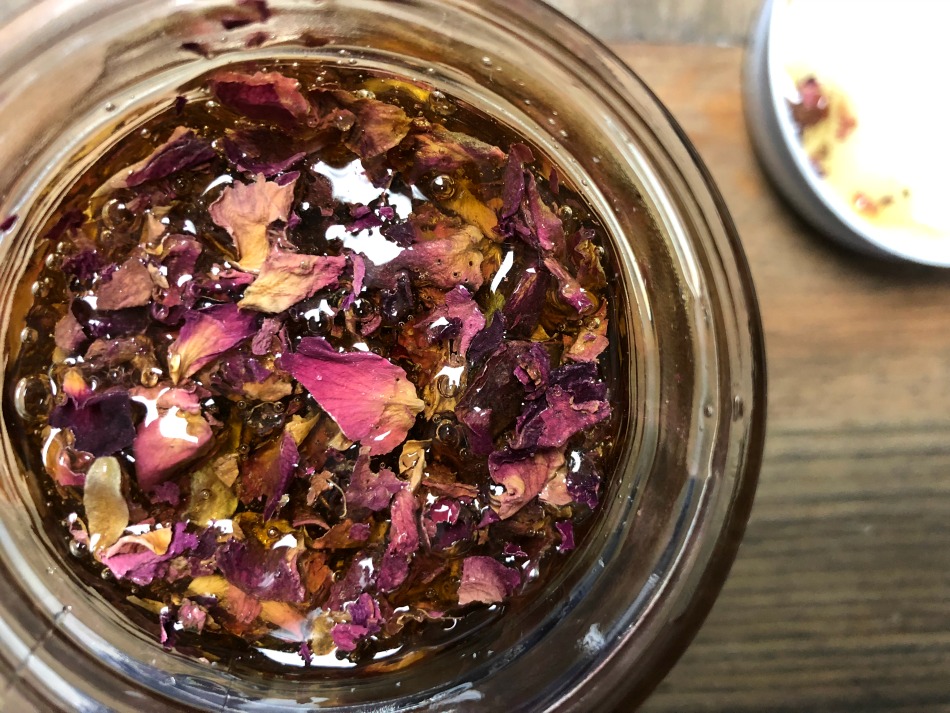
Herbal honey is quite easy to make following the folk method. Simply take some fresh or freshly dried plant material, place it in a glass canning jar, and pour honey over the top, covering it with at least 1 inch of honey. Cap the jar, label it, and let it sit in a dark, warm location for 4-6 weeks. You can even put it on a heat mat to speed the maceration time up to 2 weeks.
Two of my favorite herbal honey recipes is thyme honey and rose honey. Thyme honey is antimicrobial and great to use for viral or bacterial infections, particularly those that affect the respiratory system, and rose honey is a relaxing nervine and a delicious addition to herbal teas, syrups, and pastilles.
You can find more herbal honey recipes on the blog, including garlic honey, onion honey, fermented red onion and thyme, and an autumn honey.
Herbal syrups are also quite easy to make. A basic herbal syrup uses 1 part herbal decoction to 2 parts honey (herbal or plain… it’s your choice). If that’s too sweet, you can reduce the combination to a 1:1. Syrups made with more honey to water will have a longer shelf life as discussed above.
You can find many herbal syrup recipes on the blog, some of my favorites being ultimate elderberry syrup, wild cherry bark syrup, and these five herbal syrups for fall.
What About Herbal Glycerites, and How Do They Compare to Herbal Honey and Syrups?
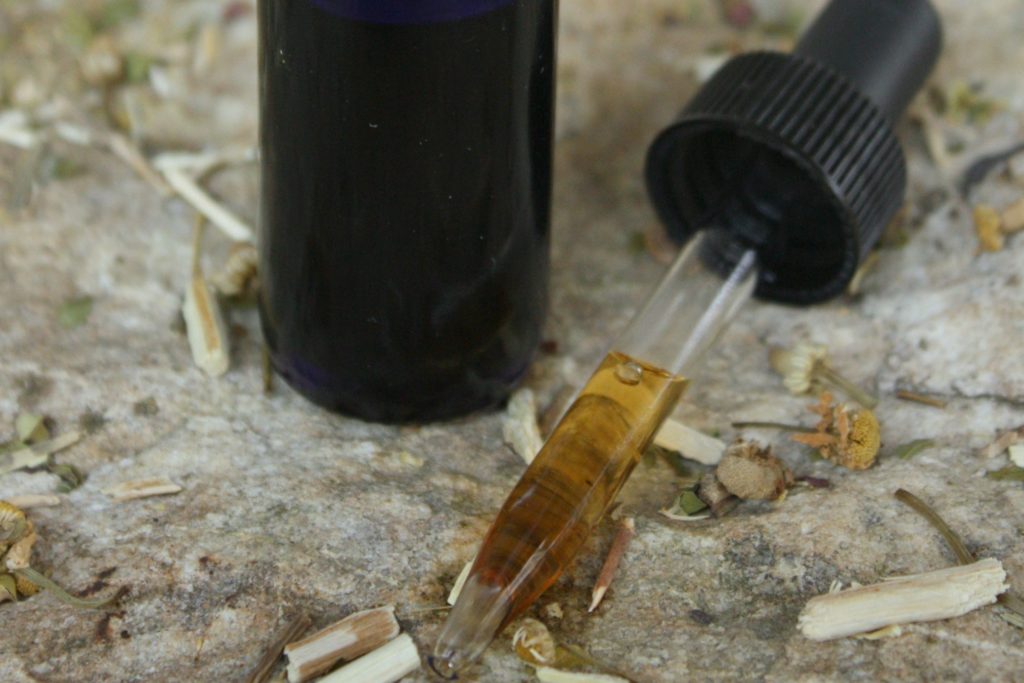
Glycerin, a sweet, syrupy substance that is sourced from plant oils, such as palm, coconut, and soy, can be a great alternative to using honey. It is chemically related to alcohol and is often used as a solvent and preservative when making alcohol-free herbal extracts as it has the ability to extract some alcohol-soluble constituents from plant material. It’s commonly used with fresh plant material, but it can be diluted with some water and used with dried plants as well.
Speaking of extraction…
Honey has the ability to extract water-soluble constituents, such as acids, alkaloids, bitter compounds, flavonoids, glycosides, gums, minerals, mucilage, polysaccharides, tannins, vitamins, and (for a short term) volatile oils from plant material. It can also extract small amounts of oil-soluble constituents, such as some fatty acids (alkamides), lipophilic flavonoids and phenolic acids, resins, many terpenes, and some volatile oils, due to pollen lipids and trace beeswax found in honey. In addition to honey’s extraction abilities, it has even been reported to synergize with certain plants, having the potential to enhance the bioavailability of some herbs, like licorice (Glycyrrhiza spp.) root (SOURCE).
Glycerin, on the other hand, extracts bitter compounds, glycosides, polysaccharides, saponins, tannins, and vitamins, and to a lesser extent, alkaloids and volatile oils. Because glycerin is often diluted with some water during the maceration process, you can expect water-soluble constituents to be extracted from plant material as well.
There are some safety and dosage notes to consider when using herbal honey, syrups, or glycerites.
- First off, never give any herbal preparations made with honey to a child under one-year-old. Instead, substitute maple syrup in place of honey.
- Next, herbal honey and syrups typically have larger dosages than herbal glycerites. It’s not uncommon to use anywhere from 1 tsp to 2 tbsp per dose of herbal honey and syrups, whereas herbal glycerites will typically fall anywhere between 2-10 mL.
How to Use Herbal Honey and Syrups Throughout the Year
While herbal honey and syrups can be used daily to sweeten infusions or drizzle over foods, they’re most commonly used during cold and flu season when immune support is desired or when troublesome symptoms show up, like sore throats and coughs, as they can be quite soothing to dry, irritated tissues.
You’ll often find herbal honey added to electuaries, pastilles, and lozenges or chews, incorporated into oxymels, syrups, and tinctures (to make an elixir), and even added to herbal salves from time to time.
Will You Give This Preparation a Try?
By now, I hope you can see how valuable honey is in the home apothecary, let alone herbal honey, as they form the basis of many preparations from syrups to elixirs to pastilles. I hope you’ll give making herbal honey and syrups a try sometime soon using one of the recipes linked above.
Leave a comment and let me know which of the above recipes sound like a fit for you and your family.

Love and light,
Meagan
RECOMMENDED RESOURCES:
- Cech, R. (2000). Making plant medicine. Horizon Herbs.
- Easley, T., & Horne, S. (2016). The modern herbal dispensatory. North Atlantic Books.
- Green, J. (2000). The herbal medicine-maker’s handbook: A home manual. Crown Publishing Group.
- Yarnell, E. (2004). Phytochemistry and pharmacy for practitioners of botanical medicine. Healing Mountain Publishing.