



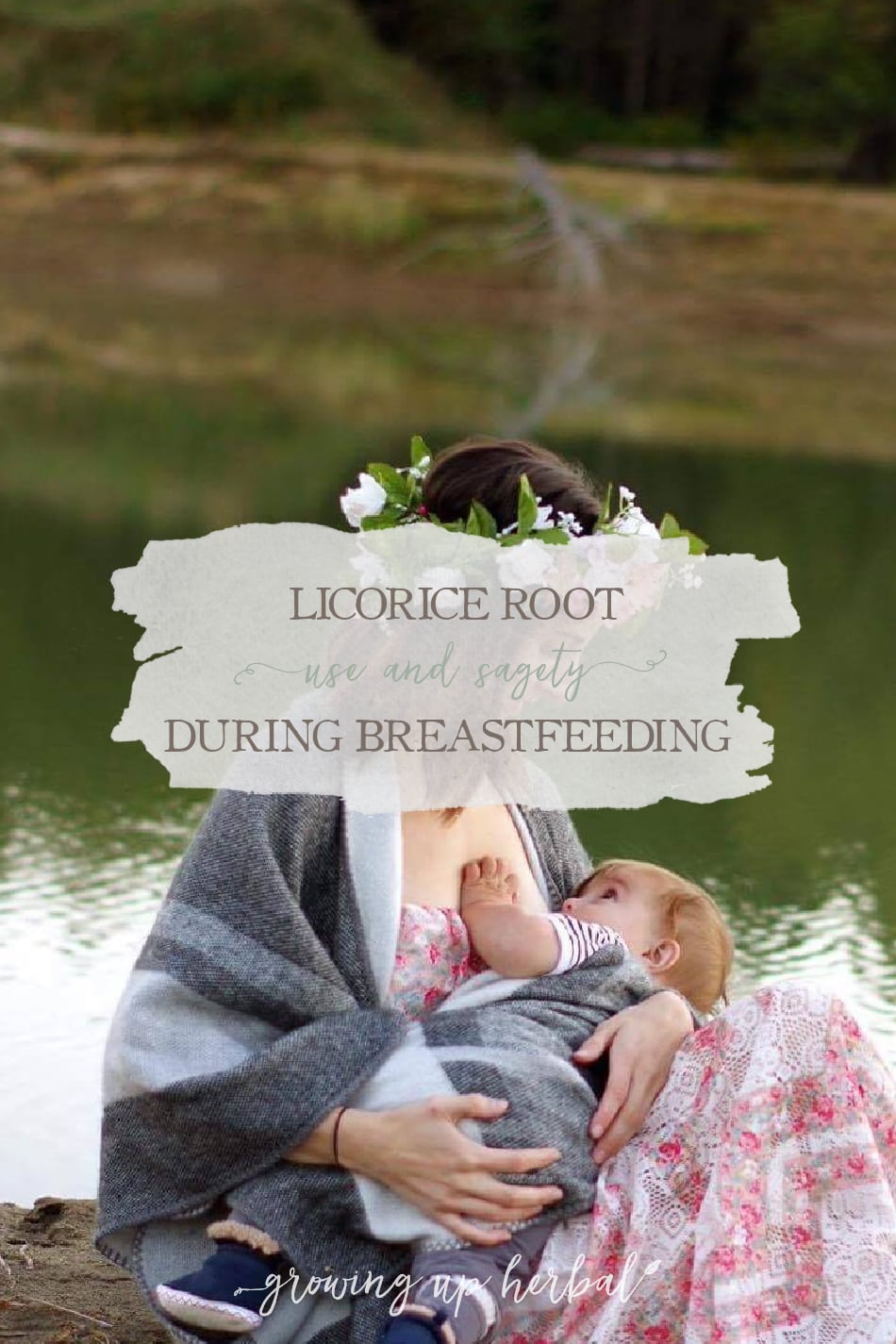
Today I’m answering a question from a past customer of mine wondering about licorice root safety during breastfeeding.
I mean, licorice root is a great herb. Not only does it have some pretty amazing therapeutic properties, but it tastes great and it’s known as a “children’s herb”. So why, if it’s labeled a “children’s herb” by herbalists, do so many sites and herbalists tell nursing mothers to avoid it?
What? An adult can take it if they’re not pregnant or nursing, but somehow making breast milk suddenly makes it not okay for your body? It certainly isn’t because of the effect it will have on the baby, right? It is a “children’s herb” after all.
These are all valid questions, and you may have even wondered about licorice root safety during breastfeeding at one point or another as well. In today’s post, I’ll be clearing the air once and for all. Keep reading.
Question:
Hi Meagan! I received our products (Yeast Tea blend) in the mail and am ready to get started fighting this yeast, but recently saw on a blog that licorice root should not be taken by nursing mothers. I know that licorice root is in your baby’s blend of Yeast Tea, but is it safe for them since it’s not recommended while nursing?
I Googled licorice root safety during breastfeeding and most sites said to avoid it, but I didn’t read too into it since sometimes so much info on the internet will scare you because people are just trying to cover every imaginable situation.
I just wanted to check because I’m still learning about using herbs safely in my family. Are there any side effects I should watch out for?
I guess what I’m really asking or wanting to know is why it’s not recommended for nursing mothers, but it’s okay for babies to take. Not questioning you at all, I’m just wanting to learn more and understand. Thanks!
Answer:
First off, I love this question. Not only is this mama a customer of mine, but she came across something that piqued her interest and did some research on it. Now she wants to understand more about licorice root safety during breastfeeding and she’s coming to me for some help.
This, my friends, is a great way to learn, understand, and grow — not only in using herbs for your family but in any area of life. If you don’t understand something, ask others who may have some help for you!
Okay, so below I’m going to talk about 4 different ways licorice root is typically used, and then I’ll address the whole licorice root safety during breastfeeding issue.
4 Ways to Use Licorice Root
Licorice root comes from, you got it, the root of the licorice plant. This Milwaukee Journal article states that the plant is related to the pea family of plants, but that it’s a perennial (meaning it comes back year after year) and its flavor is thanks to the sap in the long root system of the plant.
Many authoritative places (including the FDA and medical websites) warn against using too much licorice as a dietary substance or even against eating too many foods or candies that contain real licorice in them due to the high incidence of overdose. The reason behind this is that licorice has dose-based effects which means that you get different effects in the body based on the dosage you take. We’ll talk more about this in a bit.
Thankfully, licorice can be safe for people of all ages although its use is discouraged for certain people. It’s known as a “children’s herb” because it tastes so good and is used to flavor many nasty-tasting treats and herbal remedies.
It tastes so good because it contains a saponin-like glycoside (which is a sugar known as glucose) called glycyrrhizin which is 50 times sweeter than sugar, and it’s also used as a catalyst for drugs and other herbs due to its ability to facilitate absorption by the body. This catalyst effect is thought to be because of the large amount of saponin-like substances found in the root that gives it a surfactant-like effect that helps the body absorb the properties of the licorice and whatever else is with it better.
Because licorice root has dose-based effects, it can be used in a wide range of therapeutic ways. The following 4 uses are based on that small to large dosing range.
1. Demulcent
Licorice root has a high mucilage content meaning it gets slippery and slimy when it comes into contact with water, and this helps it to coat the mucous membranes inside the digestive tract. This makes licorice a valuable addition to remedies for digestive issues, diarrhea, sore throats, and ulcers.
2. Expectorant
Licorice root also acts as an expectorant which means it helps to thin the mucous inside the airways so that it’s easier to cough up. It’s a great addition to cough syrups and works well for remedies for respiratory infections like bronchitis and pneumonia.
3. Anti-Fungal
Licorice root is known to have at least 25 anti-fungal compounds contained within it. This makes it a great help for anti-fungal remedies used internally and externally.
4. Stress/Hormones/Blood Pressure
One of the most well-known attributes of licorice root is its actions on the body’s hormones, specifically those produced in the adrenal glands. Glycyrrhizic acid is a compound found in licorice root and it helps the body deal with stress by inhibiting the breakdown of cortisol by the liver. Cortisol is a hormone made in the adrenal glands and is released under varying circumstances — stress (good and bad) being one of those.
This is specifically useful for people with Addison’s disease or people with low blood pressure because the glycyrrhizic acid stimulates the production of another hormone, aldosterone, in the adrenal glands which causes the body to retain water and certain minerals and that causes an increase in blood pressure. People using licorice root for these cases should always work with a trained herbalist or naturopathic doctor because the dose of licorice is a fairly large one and there can be negative effects (overdose effects) on the body if too much is used.
Cautions of Licorice Root
High Dosages
Unfortunately, licorice root is not one of those non-toxic, no dosage cap herbs. It can be toxic in large doses, and there are some people who should steer clear of licorice root altogether. It’s not recommended for anyone to use large doses (30 grams or more) of licorice for more than 4-6 weeks.
CLICK HERE to read an article about the negative effects on nursing mothers taking large doses of herb blends that contained licorice to increase their milk supply. This isn’t to scare you from using licorice or any of the other herbs in these milk blends, but to show you that you must not use too much. Starting with a low dosage and working your way up is a good mindset to have with any herbal preparation. Pay attention to how you feel as well. If anything starts to feel “off”, decrease your dosage a bit at a time until you feel fine again and stay there.
Children
It’s perfectly fine to give your child remedies with licorice. In fact, it’s very beneficial to them. Just be sure that they don’t get a hold of your whole licorice tincture bottle and drink the whole thing. Remember, licorice tastes great, and if you’ve made a glycerite, it can taste even better to kids.
Pregnancy
Pregnancy is one of those times in life when you want to avoid licorice root due to the simple fact that it can increase blood pressure and pregnant women already have a risk for high blood pressure. From my understanding… this is the only reason why pregnant women should not use licorice root.
Persons with Heart Issues
Because of licorice root’s effect on the adrenal glands, hormones, and blood pressure… it’s not recommended that those with heart issues use licorice root. In fact, it’s best that people with serious health issues use herbs in conjunction with a health professional that is willing to work with them and their health in a natural way.
Thankfully, no matter what reasons a person may have for not being able to use licorice root, there are other safe herbs that can be used in its place if you want to get the demulcent, expectorant, and/or anti-fungal like properties. Plus, some companies that manufacture herbal products have started offering deglycyrrhizinated licorice root which has less effect on blood pressure.
So What About Licorice Root Safety During Breastfeeding?
So here we are, back to our original question. Can licorice root be taken while nursing?
Well, the short answer is yes. Let me tell you why.
As far as the research I’ve done on licorice root safety during breastfeeding goes, my take is that yes, licorice root can be taken by nursing mothers, but the mother needs to be aware of the amount she’s taking and how long she’s planning on taking it. Not only for her, but because the licorice root can cross into breast milk, and then the baby gets some too. I can’t really find any information on why it would be a big no-no for a nursing mother to take it, other than someone wanting to take the safe route.
I’m sure there’s a lot more to learn about this great herb as well as the powerful properties it contains. One of the best places to start is learning how to use an herb, then practicing using it when the time comes.
Now, I’d love to hear from you.
What are your thoughts on licorice root safety during breastfeeding? Have you used it, and what were your results? Have you tried it with your children?
Thank you as always for being kind, generous, and thoughtful in the comments. If you found value in this article, please share it with your friends — it would mean the world to me.
Thanks again and have an amazing week!
Love and light,
Meagan
Licorice tea was recommended to me for anti nausea purposes (while pregnant). I also have read (can’t remember where now) that Licorice tea works to boost milk production while nursing. That said, I can’t stomach it. It has this sickly sweet aftertaste that almost makes me throw up. 🙂
Bummer Wendy. Have you tried mixing it with any other herbs that can mask the flavor a bit… like peppermint? That helps with nausea too. Or even ginger… another great herb for nausea.
My husband’s aunt was taking licorice root (I’m not sure what she was taking it for), and she started to worry that she was developing Alzheimer’s. Her memory and brain clarity was getting noticeably worse. She made an appointment with a doctor, and at the appointment she was asked if she was taking any supplements. When she said licorice root, the doctor immediately said “stop taking it, that is why you have these symptoms.” Sure enough, she was fine when she stopped taking it.
Any idea why? Maybe that is why there is the caution that it should only be taken for a short time? I never asked her how long she’d been taking it for.
Anyway, interesting.
There are a lot of reasons that could have happened Tasha. First of all, MOST doctors don’t know much about using herbs and so they’ll tell you to stop taking them instead of working with you while you take them. The doctor could have (and should have, if I might say) looked into it a bit more. First of all why was she taking it? Where did she get it? Was it capsules, tea, or a tincture? How much was she taking and how often? All of that stuff will matter because you can overdo licorice depending upon the type. Her doctor most likely told her to stop taking it and put her on a drug for her issue which then comes with all of it’s own issues. He most likely didn’t really solve her problem… just relieved her symptoms.
The best kind of licorice (the whole form of the plant) has the most medicinal properties and has been studied a lot and shown to be very beneficial for things like hormones, inflammation, viral and bacterial infections, liver protection, healing ulcers, blood sugar irregularities, etc. The list could go on. But, it can be taken too long and in too high of doses (which is the problem when people self medicate… whether its on pharmaceuticals or plants) and can lead to side effects similar to what your husband’s aunt was experiencing. There’s a type of licorice that’s sold in stores today called “deglycyrrhizinated licorice” and it has less side effects, but it has less medicinal properties as well. It’s mainly used to help treat ulcers in the stomach.
My best guess is that she was taking too much or she’d been taking it for too long. When it comes to kids… licorice isn’t a long-term herb that you’d give them and if you thought they needed it for longer than recommended, it’s best to consult one-on-one with an herbalist or with someone who can formulate something that’s a good fit for them. Same goes for adults. The majority of herbs are safe, non-toxic, and have minimal side effect, but there are some dangerous ones, ones that can be toxic in large doses or if taken too long, and those that have side effects. They’re medicines… plant medicines and they work.
Anyway, hope that helps, and I hope your husband’s aunt recognizes that it’s not the plant that is always the problem… but usually how we use the plant.
My thought is that it lowered her potassium levels. And that definitely cannot affect on the brain. I’ve experienced it myself.
I think it’s the whole “licorice could cause pre-term labor” thing as well as this story (link below) about how licorice could harm kids’ intelligence. I’m guessing it’s a “better safe than sorry” type of deal… http://www.telegraph.co.uk/health/healthnews/6265847/Too-much-liquorice-while-pregnant-could-harm-childrens-intelligence.html.
That’s a very interesting article Bea… thanks for linking to it. No matter, both of the things you mentioned have to do with taking licorice while pregnant. I can see why that’s not a good thing. It just doesn’t make as much sense to me why, after you’ve had the baby, you still aren’t supposed to take it when you’re nursing. Baby can have it then, and it doesn’t affect the milk supply. So what’s the big deal with it at that point? Again, thanks for the article. It’s interesting how in some areas of the world people are exposed to more of something than other areas. I think it said licorice was a big thing in Finland.
Hello Megan,
My 2 mo old is exclusively breastfed. I found this post while researching the ingredients of an immunity tincture I would like to take.
I also happened to find this article and thought it may be an answer to your question about how Licorice Root gained a reputation for being a possible danger for breast feeding Mamas (aka their babies).
Not sure if this dismisses concerns for all or simply puts up a larger red flag for the play-it-safe type.
http://www.drugs.com/breastfeeding/licorice.html
Thanks so much for that article Stacy! I’ve never heard of anethole toxicity before. From my understanding of the info in the article, that type of toxicity came from using a combo of herbs used to increase breast milk and wasn’t linked to the licorice, but was more connected to anise and fennel. And, the negative affects seen in babies and mothers who used these herbal blends that contained licorice were drinking EXCESSIVE amounts of these teas! I’ve not read any reports on negative affects from normal dosages.
I also love that they pointed out that many manufactured products can say they contain a certain amount of an herb, but that many times, that amount isn’t correct. That’s why I think it’s important to go with well-known manufacturers when it comes to buying supplements as well as learning how to make your own supplements too. It’s easier to gauge how much you’re consuming when you make your own supplement.
Another thing to consider is that everyone responds differently to herbs. There are so many variables that it’s impossible to predict how one will respond which is why it’s important to start with low doses and work your way up to stronger doses while paying close attention to how you feel and backing off if anything starts to feel “off.” Does that make sense?
No matter, I still stand on the fact that licorice is okay for a nursing mama to take while breastfeeding, as long as she’s aware of the dose she’s getting and she’s not taking it for more than 4-6 weeks. Loved the article though, and I think it’s important for people to see how a common herb that’s safe for even children, can have negative effects if used incorrectly. Herbs are potent and powerful, and they work! I’m updating this post to include this info… thanks!
Hi Meagan,
So what is considered normal doses of liquorice root if taken as a tea. I am breastefeeding and have avoided it during my pregnancy. I had a few cups recently for the first time and then had recurrent mastitis. I don’t think the too are linked but wondering what the recommended dosage is. Many thanks
Hey Amanda… I seriously doubt that the tea had anything to do with your mastitis. Mastitis is a bacterial infection so like you said, the two most likely aren’t linked. As for the dose of licorice, 1/2 – 1 tsp. of the root decocted in 1 cup of water and drank 3 times a day is the typical dose for a 150 lb. adult, but of course that will vary depending upon what you’re taking it for, how fresh the root you’re using is, and your weight. Hope that helps.
Meagan,
Based on reading your post and the comments and follow-up, I’m gathering that occasionally drinking a commercial tea blend that contains licorice (e.g. spiced herbal tea blends such as chai, etc.) is OK for breastfeeding mothers. Especially if the tea isn’t drunk for therapeutic reasons…just to have a tasty tea on a chilly day. Is that your opinion?
That’s right Alicia… that would be totally fine, but the point of this post was to say that I can’t find any reason as to why you can’t use therapeutic doses of licorice while nursing. I personally would use licorice (medicinally and for enjoyment) when nursing if needed. My question is this… if licorice is okay for children, why then is it discouraged during nursing?
Meagan,
Licorice root seems to be very controversial for children. I was wondering what is a safe amount? I purchased some licorice root tea. Each bag contains about 1.6mg. My 2 1/2 yr old has a chest cold.
Thanks,
Michelle
Hi Michelle. Thanks for your comment. From the majority of the info I’ve seen on licorice, it’s a very safe herb that’s gotten a bad name due to some people using it inappropriately. Herbs have chemicals in them and those chemicals respond in the body. It’s important to know how to use a plant before using it. Herbalists have used licorice for hundreds of years safely in children (as well as adults) so to me, it’s no big deal. However, I do expect everyone to do their own research and take their own stand.
As far as a dose goes… Dr. James Green suggests 2-4 TBSP of root per day and herbalist Michael Tierra suggests 3-10 grams per day. These are adult dosages so you’ll need to figure out what the child dosage is for that. Most people use Clark’s Rule to find child dosages. I have a post coming out this Wednesday all about dosages for herbs, but here’s how Clark’s Rule works. Take your child’s weight and divide it by 150. That will give you the fraction of the adult’s dose they can take. Next find their minimum dose and the maximum dose, then I’d start with the minimum and increase as needed towards the maximum. For example, if your child weighs 30 lbs. then the fraction of an adult dose would be .2 or 1/5. Following Michael Tierra’s dosage suggestion, the minimum dose would be .6 grams (3 x .2) to 2 grams (10 x .2) for a 30 lb. child. I hope that makes sense!
I’d also know about any toxic effects the herbs could cause (in this case water retention, elevated blood pressure, and lowers levels of potassium with LARGE doses) and watch for that. Hope that helps, and remember, herb’s have an incredibly safer track record than modern meds. We just need to be respectful and responsible with how we use them!
I was wondering if taking the herb or herbs in a tea in an inconsistent manner over a long period of time would be ok? For example only drinking a tea (that included fennel, anise seed and or licorice) once a day, 2-3 days out of a week for let’s say a year and maybe skipping a week here and there. I had a “Mamma’s Milk” tea blend and had been drinking it since my son was born (he’s 9mo. now) at first I had about a cup a day but eventually slowed to a couple cups a week just whenever I thought to drink it. I’m out now and was planning on making my own which led me to your site(was going off your tea recipe but planned on subbing in some different ingredients because I also have PCOS and thought I’d hit 2birds with one stone: balance hormones and up milk supply) which sort of opened up a can of warms so to speak. I guess basically I’m asking if I use something like licorice sporadically but frequently does the time frame you gave still apply? Actually thinking of just leaving it out for now until I’m done nursing but since some of the herbs in the milk tea also help with women’s issues was wanting to know for the future. Sorry this is so long just figured I get a more accurate answer if you had all the facts.
I think the biggest thing to keep in mind with licorice is the dose you’re taking and the possible side effects it can cause when used at high doses over a long period of time. From my understanding of that herb, low doses (like those in Mama’s Milk blends) are fine for daily use because the actual amount of licorice is very low. However, I would watch for side effects like an increase in blood pressure or swelling as those are most common with high doses of licorice, and of course, if you have other questions or you’d like more info from a professional, speak with your doctor, midwife, or clinical herbalist about it. Hope that helps!
Hi, I would think that the reason it isn’t recommended when breastfeeding is that because it passes in the milk you cannot monitor the dose that would be passing to your baby. Whereas by giving it to a baby separately you can accurately monitor how much your baby is getting.
That could certainly be true Kattie, but I’d think that you’d get a much higher dose than baby would therefore you’d be getting too much before the baby gets too much. Seeing as how licorice is okay for children I just thought it was odd about not taking it while nursing. That’s usually a warning for herbs that children can’t have. But you do have a good point since children would need a smaller dose than an adult. It would be hard to judge. Thanks for sharing your thoughts with me!
auremere is a toothpaste that contains licorice root. Is this toothpaste ok for children to use daily? I asked the manufacturer how much licorice root is in their products but was unable to get a clear answer. Thank you. Pat
Yes Pat. Licorice root is considered safe for children. I don’t know the amount in the toothpaste, but I’m assuming your kids won’t be eating tubes of it so there should be no risk for getting too much.
Hi Meagan, As a mom of 3 and being raised in The Netherlands myself, I’m surprised the ‘licorice danger during pregnancy and/or breastfeeding’ hasn’t reached the midwives there yet… Almost everyone I know over there (I now live in New Zealand) must be close to overdosing themselves as it’s a number 1 treat, during everyday life, pregnancy and also breastfeeding. As I can’t get my favourite licorice over here, I’ve been drinking a licorice tea that’s really flavoursome, but I do try to stick to a max of 2 large cups a day. And to be honest I haven’t seen any side-effects positive or negative and my kids all seem clever enough, so I highly doubt anyone else should worry. The high blood pressure risk is definitely well known over there, but as a low pressure sufferer myself, I’ve enjoyed drinking my licorice tea, containing real licorice roots among other tasty ingredients. Thanks for the informative blog 🙂 Brenda
That’s very interesting Brenda. I love learning how other countries use herbs. I think it helps us to learn more. I can only guess that not enough is being taken to cause problems. Overall, licorice is considered a safe herb for children, but like many herbs, it’s important to know the precautions about it before taking it. Thanks for your comment!!
This is the first time I able to send a comment.
I have studied herbs off&on for 30years.
I have learned to keep all I’ve self taught on herbs open.
Herbs were used before big pharmaceutical started making big bank on chemically alteted substances.
They don’t want to lose their big dollar to us not wanting to be sicker with side affects from our medacations.
Some people don’t want us to learn these simple inexpensive herbal medicanals,that have little to no side affects.
I haven’t heard of anyone dying from medicanal herbs. People dye regularly on prescribed medicanals.
So I say what you say , study, learn your herbs. More info all the time, some additional thing these wonderful simple plants can do.
There is not a lot of money to be made by pulling it out of ground,pull off tree,bush . . . And then simmer,steep, extract . . . Not much funding for somthing that can’t be patiented .
Seems everytime I turn around there is another thing herbs can help us with, another herb that is safe enough for children.
Seems like we maybe getting false warnings.
In Gods living book i belive Paul the apostle teaches us not to belive teachers including hisself until we investigate until we prove our teachers right or wrong. The apostle said be like the Berons, they didn’t belive anyone untill they studied the word,made sure they weren’t being lied to. Wondeful thing wisdom is.
Great point Christine, and I love that it puts the responsibility back on the individual because ultimately our health is OUR responsibility. Yes! We need to research, study, and double check what we hear others say. I totally agree. That’s a great principle to live by, and it’s a great way to really learn herbs! Thanks for your comment!
Hello! I am doing some research for my sister, who is currently breastfeeding her 6 week old baby. She picked up a cold, and I recommended some of my favorite herbal teas for when I have the sniffles. She asked if they were safe for breastfeeding, and I didn’t know so I checked. Almost all of them contain licorice, but in relatively small doses (760mg, 175mg, and included in a list of a blend that is under 2 grams). From what I have read here, I don’t see why there should be any problem for her to take a cup or two per day of this tea for the next week or so while she gets over her cold. Does that sound right?
Well, I can’t really tell her what to do, but I am not convinced that it is unsafe for a breastfeeding mother to take in low doses. If the blend is under 2 grams, that’s a low dose, and if she’s taking it for a cold then she won’t be taking it long-term. You can direct her to this post and let her check it out for herself. If she feels comfortable with it, then she could use it for a bit, keeping an eye on how it makes her feel. Hope that helps Liz! Thanks for your comment!
Hi, my question is can I use licorice root extract topically while pregnant ( for melasma) & in the postpartum-breastfeeding phase??
Licorice is a safe herb as long as you don’t have cardiac or kidney issues (or your doctor has told you to avoid it) as long as you take reasonable amounts (no more than 10 grams a day) and no longer than 6 weeks at a time.
Also, what other herbs besides fennel & anise (both of which I cant stand the taste or smell) help to increase breastmilk, theres the Mothers milk tea but once again it has fennel & anise(yuck)…?
Here’s a post on herbs to increase or decrease breastmilk as well as my own personal mama’s milk blend. I don’t like the taste of fennel either, but with this blend, I can’t really taste it all that much. Hope this helps!
Hi! I am trying to figure out if I can have a little licorice in some tea, as I am suffering from a terrible cold with chest and nasal congestion. I am 39 weeks pregnant, and so the fear of pre-term labor isn’t really there, which seems to be the fear about using licorice during pregnancy. Do you have any thoughts on this? Thank you!
I’m so very sorry, Lydia, but I can’t offer any individual advice… only information. If I were you, I’d ask my midwife or OB what their thoughts were. Most likely, seeing how far along you are and if you’ve not had any blood pressure issues during your pregnancy, they probably won’t have a problem with it. The dose you’d get in a tea would be fairly minimal and shouldn’t cause any issues, but it’s always a good idea to check it out with someone who knows your history and has followed your pregnancy. Hope that helps!
I usually suffer from pretty severe mood problems (very angry) when premenstrual and my milk supply drops. I am breastfeeding a2 year old. Last month I had no anger issues and my milk supply stayed normal. The only thing I could think of different in my diet was some licorice sweets with licorice extract in them. So I did some research and was surprised to find that not only is it known to help with PMT but also milk supply, which brought me here with the question of safety. I have decided to invest in licorice root to make tea from to use the week before my period. I also have low blood pressure so am convinced this will be a great help all round for me. Also interested that it affects cortisol. My daughter is quite an anxious toddler so I’m hoping she’ll get some benefits too. Thanks for this post 🙂
You’re very welcome. Licorice is also an adaptogen herb so it can help the body during times of stress. I’d love to know if you see results from this, Linda. Thanks for sharing!
Hi there, this post was very reassuring although I’d like to know your opinion specifically w what I’m taking.
I was diagnosed w severe adrenal fatigue. They told me to take this adrenal complex blend in capsule form which contains licorice 7:1 extract from Glycyrrhiza Glabra root 1.75 (each capsule is 250mg)
It also contains Rhemannia rhizome 5:1 extract from Rhemannia glutinosa 750mg (each tablet is 150mg)
I started 2 days ago, I noticed a significant increase in my milk supply as my son is 15m and about weaned…well now he’s drinking more. I’m thinking all the new supplements increased my supply? I’m also taking teaspoon of magnesium calm at night, 5000 of vitamin C daily, 4 of the multivitamin, turmeric and coconut oil and pink salt in my drink for adrenals.
My son went from being very constipated for months to right now having several BM a day and soft, then very dark and watery. Yesterday I took 3 of the adrenal complex capsules to stabilize my blood pressure as it had been low and now it’s normal, or even a bit high at 137/70, it had been 100/40. So I’m thinking it’s working? But I just want to be reassured that it’s ok for him…and that maybe I should take 2 instead of 3 capsules a day? That would be 500mg a day of licorice.
If it shouldn’t be used more than 4-6 weeks, I’m wondering what I can take to heal adrenal exhaustion while nursing. I can’t bring myself to wean him, he just cries and cries 🙁
I appreciate your help!! ❤️
I’m sorry, Ana. Unfortunately, I can’t give you individual health advice as I’m no doctor. However, I can give you some tips or ideas that may help you. First, if your little man had a watery BM, it could be because of the extra magnesium you’re taking at night. Perhaps you can cut back on that and add in some magnesium lotion or take some magnesium baths instead to see if that helps. As far as the increase in breastmilk goes, licorice has been known to do that as it can cause water retention, but so can other things. It doesn’t sound like you’re bummed about that as you don’t sound like you want to wean him just yet. Next, as far as how much of the licorice your little one is getting through breastmilk goes, this site says that less than 1% of what mom takes comes through her breastmilk, and seeing how licorice is safe for kids, he’s most likely not getting too much. If it were me, I’d talk to the person who suggested this protocol for your adrenal fatigue, especially if your blood pressure stays on the high end or if they want you to stay on it for longer than 6 weeks. There are many other adaptogen herbs you can use to support your body if you have adrenal fatigue that don’t have the effects licorice has. Hope that helps, and best of luck, mama!
Hello Megan, I read through your posts and do not see an answer to my question, which regards the effects of phytoestrogens on a nursing baby. Actually, my son is 27 months old and still a nursing devotee. I have noticed remarkable estrogenic effects whenever I drink licorice tea and wonder if there is any concern about the estrogen affecting a boy’s development. None of the websites or herb books I know speak to this concern, although it is a concern when taking synthetic hormones. So, my question is whether phytoestrogens in licorice would also be problematic for a developing child.
This is a very valid concern, Kim, and you’ve asked it at just the right time seeing how I just looked into phytoestrogenic herbs (and the scientific studies behind them) yesterday. First off, let me say, I’m not an expert at evaluating scientific studies, I don’t have all the answers about this topic, and, as far as studies are concerned, they’re very limited and not always performed in a way that gives accurate results for humans. With that being said, I personally do not think that licorice is going to have a huge estrogen-mimicking effect on babies, and here’s why.
First of all, you, mama, are getting the majority of the herbs effect while your baby is only receiving a small portion of it when you breastfeed. Next, you’re drinking tea which is less potent than say a tincture is, and I’m assuming you’re mixing licorice with other herbs. If you are drinking straight licorice tea, you’re probably not drinking crazy large amounts of it. Am I right?
From what I’ve found, when people use WHOLE herbs in proper dosages and frequencies, they do not experience negative estrogen-mimicking effects from it. Only when things are out of balance do those sorts of things happen, and again, it’s rare with whole herbs. It would be more likely if you were using a supplement that contained the phytoestrogens without all the other “buffers” the whole herb has.
I could not find any studies that showed that phytoestrogenic herbs causes fetal abnormalities or even affected the development of a baby. I even looked at animal studies and the only thing I could find was that the specific herb I was looking into affected animals who ate large amounts of it after they were born. There were plenty of studies that showed specific plant chemicals had estrogen-mimicking effects, but I couldn’t find any that were done using the whole plant and showed negative effects. In fact, I found several that were specific to licorice that showed no link to developmental problems from taking it. Again, these studies aren’t perfect and there are so many variables that can affect the results.
As far as what you’ve noticed with your son goes, I’m curious, what estrogenic effects have you noticed? Are they there when you aren’t drinking the tea and then they appear when you do? How long, how much, and how often are you drinking the tea? I wonder because we know that in our daily lives we’re exposed to so many things that increase the amount of estrogen in the body, potentially leading to serious health concerns, and what I’ve found by looking into some of these phytoestrogenic herbs is that they, in a way, “trick” the body. Their phytoestrogen chemicals fit into the estrogen receptors in our bodies and “trick” the body into thinking it has estrogen when in fact it has a plant form of estrogen and not a human estrogen. Anyway, I’m sure there’s much to be said about this, and of course, you have a valid concern. If you’re worried that the licorice is causing problems, I’d personally find a different herbal tea to drink until your little man is weaned. Hope this helps you some!
I’m wondering if using a stick of licorice a few times a day for massaging teeth and gums would represent a big or small dose. When I used to do this before I was pregnant I would go through a six inch stick every few weeks, chewing a centimeter of the end to soften it and use it like a brush a few times, then trimming the end off and starting again. I imagine this represents a very low dose?
I would think that would be a low dose, Danielle, but the only way to know for sure would be to weigh the root in grams and use a guide that tells you how many grams a day is in the safe range. Hope that helps!! I’ve heard great things about licorice root toothbrushes btw!
Is licorie root safe for a 22mo to take daily? If so, how much? I saw it being used in a diy vitamin c syrup with elderberries but am skeptical using it as a supplement because in traditional chinese medicine, it is used as part of a treatment for coughs. Any views?
I’ve always been taught and found in my research that licorice root is a safe and common herb for babies and children unless they have any health issues related to their heart or kidneys (same goes with adults). It’s commonly used in preparations to add flavor or to impart some of it’s properties (one of which is aiding in coughs). Licorice root has many uses in western herbalism as well as Traditional Chinese Medicine so there’s nothing wrong with using it on a daily basis. And, licorice root is considered an adaptogen herb which means it can have a very balancing effect on the body, specifically the glandular system, and from what I can remember, it’s also used this way in TCM (in many vitality formulations). If you prefer TCM, it may be best to ask someone who knows and practices that method more. Hope this helps some!
I have been researching herbs to take for slipped discs & herniated discs. I have 1 of each. I’m finding ppl are using Licorice Root & Ashwagandha Root to heal them. Have you heard of this? I need to figure out the dosage for it also. Any links or dosages that you’very heard of? I also breastfeed a 22 mo old. I haven’t looked to see if it’s safe to take Ashwagandha root while bfing. Can you shed some light on that or link me?
This is something that I don’t know much about, Jacqueline. Back issues would be a chronic issue, and seeing how you’re nursing as well… if it were me, I’d get in touch with a clinical herbalist as they would be able to look at your health history and lifestyle and find the right herbs and dosages for you. Hope that helps some!
Is DGL safe to take?
Licorice root that contains DGL is safe for most people to take in normal dosages. However, there are some individuals that should avoid it… pregnant women and those with heart, liver, and kidney disease.
What is the baby yeast tea that you talk about here? My 17-month-old has extreme candida-induced food reactions (he got Mom’s bad gut flora that caused all kinds of problems – we’re on GAPS, healing, but it’s been slow since I’ve been so limited in herbal healing options while nursing).
He gets eczema on his face eating anything he’s sensitive to, especially after we got hit with Norovirus in December, so I’m trying to figure out a way to help his body fight off the internal yeast naturally (I also know it still is flaring because he gets bread-smelling breath, gets terribly thirsty and has trouble sleeping alongside the reddening face with nuts, seeds, grains, fruit or sugar of any kind, eggs and worst of all dairy/lactose…even the minute amount in ghee or probiotic supplements grown on dairy has triggered it badly!). Until he heals more, we’re obviously on a severely limited diet – he’s happy since I’ve removed all of those things, but it’s so hard for me to cook for him separately from the whole family and make sure everyone gets some kind of variety and good nutrition!
Unfortunately the herbal remedies that worked so well for me (Doterra GX Assist) are supposedly far too powerful for a 1-year-old. Any recommendations on something effective I could try with him? I thought perhaps grapefruit seed extract, but when I tried taking it myself, something in it (maybe remaining sugar in the extract?) made my yeast really flare, like when I have fruit right now (intestinal discomfort, yeast-induced dry mouth), instead of fighting it.
Any thoughts or recommendations for my little guy?
Hi, Amy! I’m sorry for your struggle. It sounds like your little guy has some serious gut issues flaring up in the form of eczema. Obviously, cutting out offending food is the first thing to do, which it sounds like you’re already doing. Other than that, cleansing the gut of the overgrowth of harmful bacteria and yeast followed by a gut restoring protocol is typically what’s done. As far as candida goes, I gave my little one a tea full of antifungal herbs that were safe for kids. I can’t even remember what it had in it now, but there are many antifungal herbs that children can take. Once the overgrowth was under control, I focused on things that can restore the gut lining like herbal bitters, bone broth, gelatin, collagen, and probiotics. Anyway, that may not answer your question entirely, but maybe it will give you some things to think about and look into for your little guy. Best of luck!
0.5
Hi Meagan,
Can you tell me where I can buy a licorice root extract, tincture (are they the same thing?) to give to support my child’s adrenals? How much would you advise per day for a 5 year old child? Thanks!
You can buy licorice root extract/tincture from any reputable tincture company. I love Herb Pharm, Oregon Wild Harvest, WishGarden Herbs, and Moutain Rose Herbs. There are many companies who make and sell tinctures. As far as dosage goes, it will depend on the way the tincture is made. All tinctures will provide a recommended dosage. This dosage is normally for a 150-pound adult. You can follow the children’s dosing formulas in this post to help you find the correct dose for your child. Keep in mind that licorice isn’t a long-term herb (6 weeks max before taking a break) and that there are other endocrine supportive herbs that can be used alongside or in place of licorice. Best of luck, mama!
Thank you for this article, and being objective regarding the herb. So many articles I find always shoot this or another one down with taking everything into consideration… age, dosage, what form, length of time, etc.
From my own personal experience, I was able to give a tea I made containing licorice root to my EBF 3.5 mo old who was quite constipated. At day 5 of no BMs he was quite uncomfortable. I administered 1 TBSP in a bottle and within an hour he had a BM. Did the same thing the next day, again within the hour a BM.
After this result, there is no need to give him anymore, so I am freezing the remainder in TBSP portions for future use.
You are very welcome, Bethany, and I’m glad you got some good results! Thanks for your comment!
There has come new research results which say a definite no-no to licorice during pregnancy, not only because of the blood pressure thing, but because glycyrritzhin does something that prevents something a mama naturally has to function so that the mama’s stress hormones go to the baby. This might cause bad things for a longer time for the baby. Sorry my poor language. In my home country, Finland, the recommendation is not to have any licorice during pregnancy for this reason. During breastfeeding it should be OK, what they tell here. And Finns eat lots of licorice, trust me!
Yes, Marie! Thanks for your comment. And this is what I stated in the article. It’s best to avoid licorice root while pregnant, but it should be fine when nursing. Would you happen to have a link to the research about licorice contributing to hormones being passed from mama to baby during pregnancy? I’d love to check that out for myself.
This is amazing. Thank you for such a specific post!
You’re very welcome! I’m glad you found it helpful!
Hello! I’ve also read that you shouldn’t even use products that contain licorice root while breastfeeding. I am currently in a predicament. I have a self-tanner brand that is all natural but contains licorice root. I chose this brand (Vita Liberata- Invisi Foam) because of how natural it is. Obviously I won’t be using it on my breasts because I’m breastfeeding but I wanted to use it on the rest of my body because I have a wedding coming up. Should I avoid this product? I plan to use it two nights in a row (sleep overnight in it). What are your thoughts? Would this fall under the category of “too much”?
Hi there, Sonya! As I mentioned in my article, I personally can’t find a reason why you can’t use licorice root while breastfeeding (I’d be interested in checking out the information you’ve read that says not to use it, though.), and I certainly can’t imagine your body absorbing too much of it through a topical product. I would think it would be just fine, but if you have hesitations, you can always run it past your doctor (although it’s likely that they’ll have no clue what you’re talking about and advise you against it!). Hope that helps!
Sigh, I suggested drinking Throat Coat tea to a coworker who had a terrible cough and sore throat. She’s breastfeeding and came back the next day saying she can’t drink the tea because of the licorice root that’s in it and the Internet said to stay away from it. But she will take any prescription given to her by her doctor and not blink an eye. Her dosage would have been maybe 3 cups a tea for a couple days, not even close to 4-6 weeks. Too bad.
Yes. It can be a slippery slope, researching herbs on the internet. Everything sounds like it will interact with something else, harm you somehow, or is just unknown. It can all sound very scary if you don’t know much about herbs. It often doesn’t help to speak to the majority of doctors or medical professionals about herbs either, as they are rarely well-versed in herbalism. All you can do is research the safety of the herbs you recommend for someone and give them your info with some high-quality sources included and recommend they speak with a clinical herbalist in needed. Hope that helps, and maybe direct your friend to this blog post! 😉