






Spring is the season for dreaming. For taking the work you did back in fall — the work of finding your values and identifying lessons learned over the past year — and distilling it down in winter — mulling it over in your mind and exploring how it has changed you — only to have it transform into a new dream in spring — one of the coming year and the path you should take.
If all this seasonal work is something new to you, be sure you’re signed up to receive my Seasonal Missives letter which will give you free access to the secret Seasonal Living Collective. There you will find a new mini-magazine each month that will guide you along this seasonal cycle for yourself.
When it comes to spring dreams, did you know that the herb mugwort (Artemesia vulgaris) is a great ally for dreaming?
Dream with Mugwort
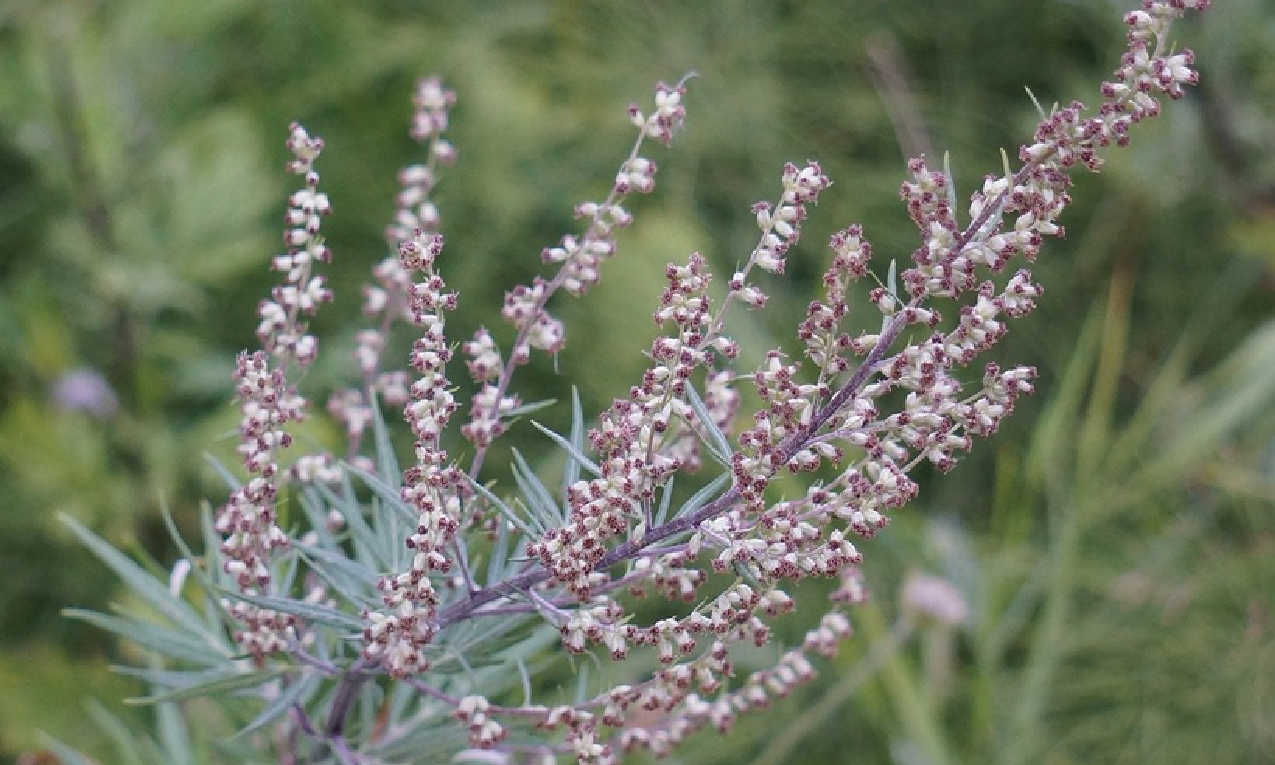
Mugwort is a tall perennial plant with soft leaves that are green on top and silver-green on the undersides. In late summer, you will find clusters of tiny yellow to reddish flowers blooming all over the upper portions of the plant.
Mugwort is said to increase dream frequency and dream recall, but how exactly does this plant do this, and why would we want to stimulate dreaming in ourselves or others?
When it comes to using mugwort for dreams, herbalist Ryn Midura says it improves dream texture, resolution, complexity, and recall (Midura, n.d.).
This means that mugwort can enhance a dream’s texture, allowing you to gradually notice more scent, color, taste, and feeling within the dream. It can also help dreams to be complete and whole as opposed to broken or partial. It may allow you to have more complex dreams rather than simple ones or help you recognize that you are dreaming while you are in a dream state. Lastly, mugwort can help you to have better dream recall upon awakening.
Now, why would you want to improve your dreams or even be aware of them in the first place?
Your Dreams Matter
While this answer will be different for everyone, if we look back to traditional practices of dream therapy, we find that ancient peoples believed that dreams could reveal more about themselves, the world around them, and even give them insights that they could not gather when in a lucid state. I believe this is still true for us today.
If we’re mindful enough, our dreams can be quite revealing. They often paint a clearer picture of our feelings and emotions, and they can give us insight into things that are going on in our lives that we have trouble noticing or putting into words.
When awake and surrounded by so many other stimuli, it can be difficult to hone in on our true feelings and emotions, so dreams can help us to be more aware of ourselves and our environment.
One way to become more aware of our dreams, and perhaps even their meanings, is to journal your dreams when you remember them. The more often you do this, the easier it will be to decode the meanings of your dreams and what they’re revealing to you.
If you’re interested in learning more about dream therapy or dream work, I’d suggest doing some research and exploring this topic a bit further. For now, though, let’s dive a bit deeper into the inner workings of how mugwort affects our dreams.
How Mugwort Stimulates Dreams
Before doing any research on using mugwort for dreams, I tried to think back to what I already knew about this plant to see if I could come up with a theory as to why mugwort might have this effect on one’s dreams.
Mugwort isn’t an herb that I’m too familiar with. I only recently purchased some to try and become better acquainted with. However, from my herbal studies, I’ve come across this herb several times, and there is one main action I remember about this plant.
It’s a stimulant, and it has an affinity for the circulatory system.
Because I know this about mugwort, I can make an educated guess about what other actions and uses it has.
If it’s a cardiovascular stimulant, that means it increases blood flow in some way. Thus, I can guess the following about this plant:
- It might increase urination due to extra blood flow to the kidneys.
- It might bring on menses due to stimulating blood from in the female reproductive tract.
- It may help warm cold hands and feet as well as promote healthy skin due to increased peripheral circulation. This increased circulation to the surface of the body can also open the pores when the body is too hot, such as during a fever, allowing it to cool.
- It may also increase the cerebral circulation, which may make it an excellent herb for memory retention and recall — and perhaps this is where its use in dream frequency and dream recall lies.
Now, several herbs are cerebral circulatory stimulants — rosemary being one of the most well-known. However, I’ve never heard of rosemary affecting dreams, so there must be something else special about mugwort that gives it this specific effect.
In my research on mugwort, I found a couple of explanations that satisfied me regarding mugwort’s use for dreaming.
First, mugwort is considered to be a nootropic herb, which means it enhances memory and cognitive function likely due to its circulatory stimulating action.
While there are many herbs classified as circulatory stimulants, some herbs are further classified depending on the body system in which they have an affinity. For mugwort, its circulatory stimulating action primarily targets the brain, the uterus, and the kidneys. Because of this, you refer to it as a nootropic when you are referencing its effects on memory and cognitive function. You refer to it as an emmenagogue when referring to its effects on the uterus, and you refer to it as a diuretic when speaking of its effects on the kidneys.
Next, mugwort is a relaxant due to its volatile oil content, and this, too, helps to relax the body and mind, allowing it to enter a more dreamlike state.
The chemical responsible for relaxation is attributed to the monoterpene thujone. This chemical is what gives mugwort and other plants in the Artemesia family their minty scent. The entire aerial portion of mugwort contains these volatile oils, but the buds and flowers of the plant contain higher concentrations.
When used in small doses, thujone blocks GABA receptors in the body, thus slowing nerve transmission, and this is what is responsible for mugwort’s ability to relax the mind and body. Mugwort also has a bitter taste. Since bitters have a relaxing effect on the nervous system, this could be a contributing factor to mugworts relaxing action as well.
So as you can see, mugwort’s ability to flood the brain with blood, and therefore nutrients and oxygen, as well as relax the body by slowing nerve impulses is one explanation of how this particular herb works to enhance dreaming.
This may also answer my question about why rosemary and certain other nootropic herbs don’t have a similar effect on dreams — they are lacking the thujone-containing relaxants of mugwort.
Because mugwort is an herb that affects dreams, it is categorized as an herbal oneirogen, a plant that stimulates or enhances dreams.
Now that we’ve explored the way mugwort works to affect dreams, let’s look at some safety factors to consider about this plant before using it.
Safety of Mugwort
Before using mugwort, there are two points of safety to keep in mind.
First, mugwort is a circulatory stimulant that has a particularly strong affinity for the reproductive system and can bring on menses. While using mugwort in small doses, such as those used for dreaming, rarely has this effect, some individuals may be more sensitive to the effects. With that said, if you are pregnant or trying to conceive, it is best to avoid mugwort during this time.
Next, when used in high doses or for long periods of time, mugwort can be toxic to the body due to the neurotoxic effects of thujone. High doses can lead to nausea and vomiting, anxiety, seizures, even death. It’s interesting to note that mugwort, when used in appropriate doses is commonly used to help these conditions, but higher doses can cause them. Interesting, right?
So what’s a high dose? Glad you asked.
Herbalist David Hoffmann (2003) suggests the average adult dosage for mugwort is:
- 1-4 mL of a 1:5 tincture in 25% alcohol (less than 1 teaspoon) used up to 3 times a day, or
- 1-2 teaspoons of mugwort steeped in 8 ounces of water (typical tea frequency is 3-4 cups a day)
Going beyond these dosage recommendations or using stronger, more potent extracts could put you at risk for toxicity.
Now that you know the risks involved in using mugwort and how to use it safely, let’s look at some specific ways to use this plant for dreams.
How To Use Mugwort for Dreams
When using mugwort for dreaming, you’ll need to first gather some plant material. You can purchase mugwort online, but you can also harvest the plant if you’ve correctly identified it and have permission to take it if you’re on private land.
The best time to harvest mugwort for dreaming is late summer when the plant is flowering. As I mentioned earlier, the buds and flowers have a higher volatile oil content, so the thujone will be stronger at this time of the year. However, mugwort leaves can be harvested any time during the growing season, and these also contain thujone as well as bitter relaxing nervine properties.
Once you have your plant material, the next step is to choose your favorite way to take the plant.
Common preparations are tinctures and teas, smoking blends or incense, herbal dream pillows, and flower essences.
Once you know which preparation to use, you’ll want to use it in low doses (called “energetic doses”) consistently before bed to see how it affects you. It is also a good idea to start with the lowest dose and work your way up to a higher dose if needed as dosing needs are different for individuals.
- Tinctures (1:5 in 25%) are taken in drop dosages (3-9 drops) rather than dropperfuls.
- One-half to one cup of tea infused with 1 tablespoon of mugwort can be drunk.
- For smoking or in dream pillows, only a small pinch is needed in a pipe or burned on a charcoal disk.
- Flower essences are taken in drop dosages (1-9 drops) from the stock or dose concentration bottle.
(Dosages sourced via (Midura, n.d.))
Mugwort should be used 30 minutes before sleep, and it’s best to taste the bitter flavor of the preparation if you’re taking it via tincture or tea form for best results.
Other Herbs for Dreaming
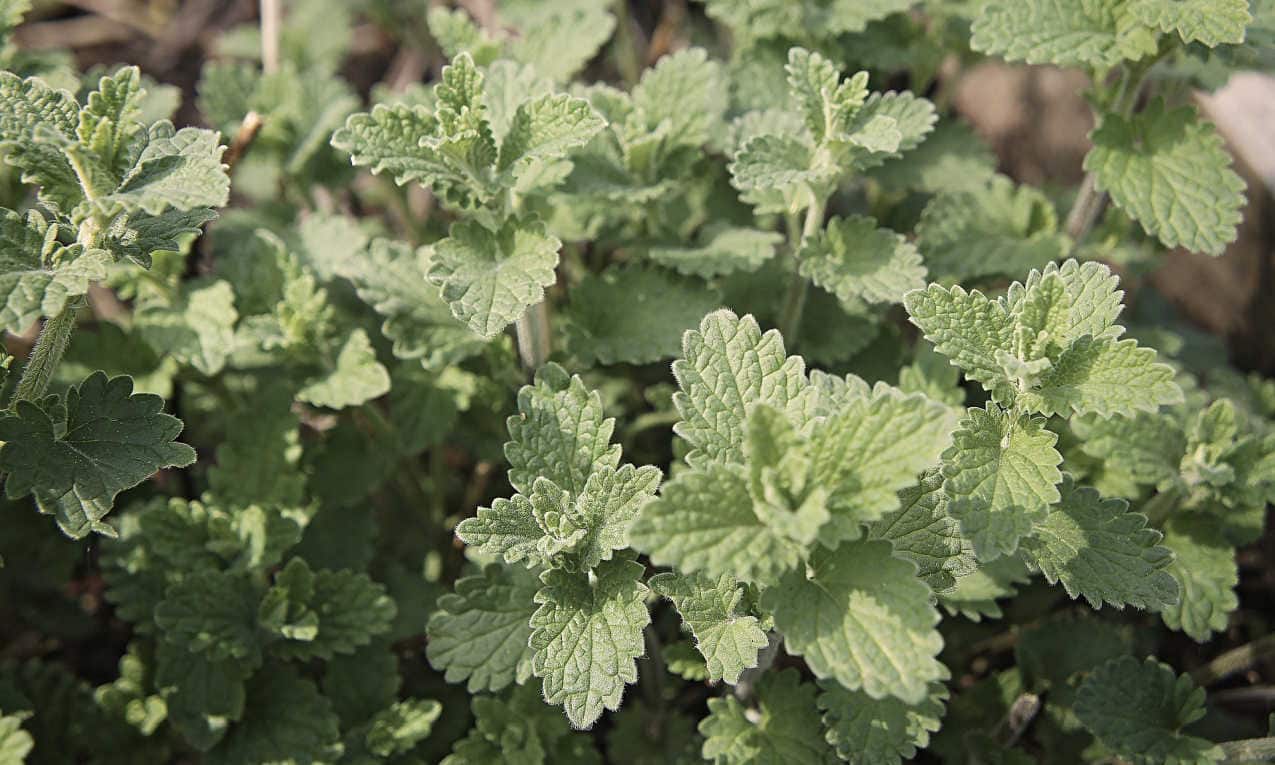
Generally speaking, herbs that are warming and relaxing, such as catnip (Nepeta cataria), damiana (Turnera diffusa), kava kava (Piper methysticum) root, calamus (Acorus calamus) root, and valerian (Valeriana officinalis) root, are also useful for dreaming as they tend to stimulate blood flow as well as allow the body to relax and transition into the dream world more easily when they are used before bed.
Herbs that contain thujone, such as any of the Artemesia plants (mugwort (Artemisia vulgaris), wormwood (Artemisia absinthium), big sagebrush (Artemisia tridentata), etc.) are also going to be useful for this purpose.
In Closing
One reason I’m sharing all of this information about mugwort and its use for dreams is that spring is the season to dream and create a vision of where you want this next year to take you and then to plan a path that will bring that dream and vision to life.
If you want to make the most of using mugwort for dreaming, spring is THE season to do it!
So I hope you’ve found this exploration of mugwort for dreaming to be interesting, educational, and inspiring. If you have any questions, feel free to leave them in the comments below.
Also, stay tuned for an upcoming video where I’ll show you how to make herbal dream incense and dream pillows!
Love and light,
Meagan
REFERENCES:
- Hoffmann, D. (2003). Medical herbalism. Rochester, VT: Healing Arts Press.
- Midura, R. (n.d.) Mugwort for dreaming. Retrieved from https://commonwealthherbs.com/mugwort-for-dreaming/
Any recommendations on good dream ???? study books?
Honestly, I don’t have any, but I’m sure there are some good ones out there. I’ll look around and let you know if I find any, and if you come across any good ones, I’d love to hear what they are as well!
All the question marks were supposed to be a little dream emoji lol