


Hello there, friends! Autumn is here, and today, I’d like to talk a bit with you today about identifying, harvesting, and using one of the best herbs for general wellness that I know of – burdock root!
Burdock (Arctium spp.) is a plant that has been used in traditional medicine for centuries, and it offers several potential health benefits, especially where the fall-harvested root is concerned.
Today, I’d like to start off talking about the wellness benefits of burdock root, then show you how to positively identify the plant and how to harvest the root (and seed) before sharing some common herbal preparations you can use the root in, and finally, give you some burdock recipes you can make this autumn if you decide to get to know this amazing plant a bit more.
Wellness Benefits of Burdock Root
- Burdock root is a good source of nutrients, such as vitamins B6 and C, along with minerals like potassium, magnesium, and iron.
- It is used to support detoxification pathways in the body, specifically the liver and the digestive system.
- Speaking of the digestive system, autumn-harvested burdock root contains a high polysaccharide content, which helps to feed the gut microbiome, making it an excellent support for overall digestive health as well as immune health due to the gut-immune microbiome connection. (Spring-harvested burdock root tends to have more bitter properties, making it a fine herbal ally for stimulating digestion and acting as a mild laxative.)
- Some studies suggest that burdock root may help regulate blood sugar levels due to the polysaccharide and bitter compounds, making it potentially beneficial for individuals with diabetes or those at risk of developing it.
- Burdock root also contains compounds that allow it to ease inflammation, especially in the joints, making it very helpful for those with arthritis. It’s even used externally as poultices or creams to ease inflammation in skin conditions like eczema, acne, psoriasis, and even burns.
- Burdock root is also a powerful antioxidant that helps combat oxidative stress and protect cells from damage caused by free radicals.
Now that you know how great this root is for you, let’s look at how you can positively identify and harvest burdock root.
How To Identify and Harvest Burdock Root
Burdock is a great beginner herb because it’s readily available throughout the year, grows in a wide variety of locations, and has distinguishing characteristics that make it easy to identify.
Here are some of the characteristics of burdock to look for:
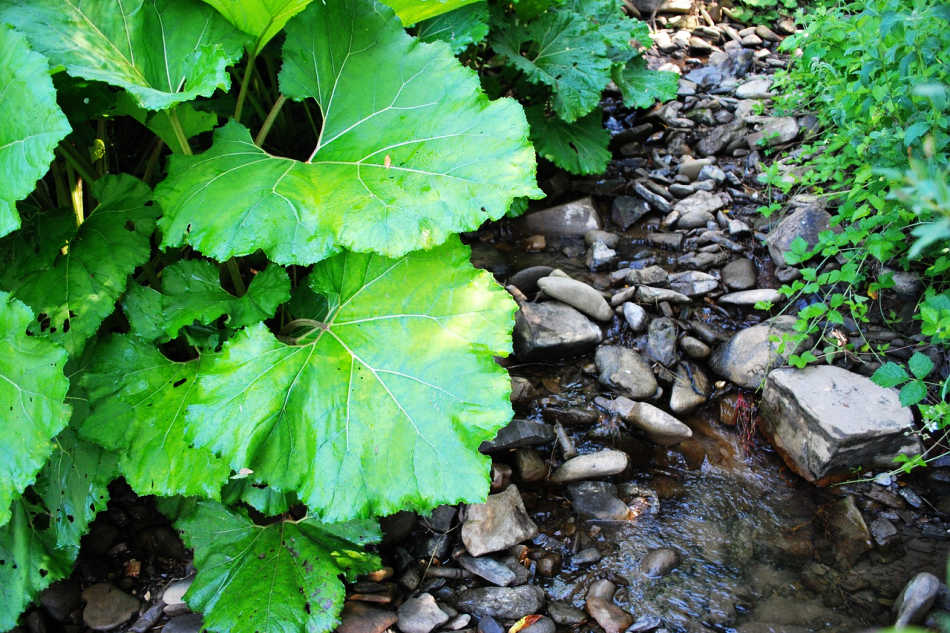
- Leaves: Burdock has large, heart-shaped leaves that are somewhat similar in shape to rhubarb leaves. The leaves are usually green on top and lighter green or whitish underneath, and the bottom of the leaf has a somewhat fuzzy or hairy texture.
- Stem: Burdock stems are tall and upright, growing from a single origin from the ground in a rosette pattern. Stems typically reach heights of 3 to 5 feet. The stems are fibrous, grooved, and can be somewhat hairy.
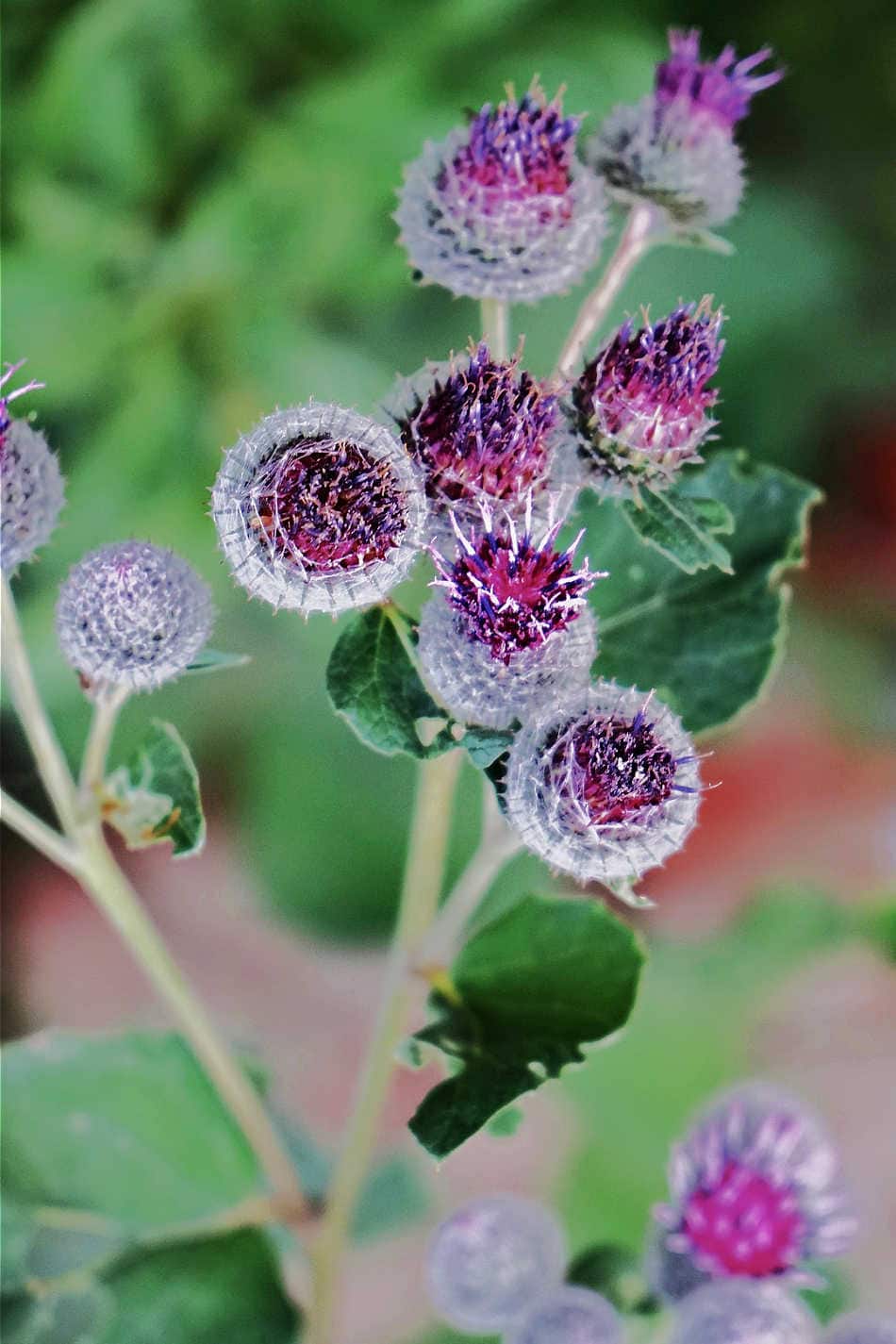
- Flowers: Burdock plants produce globular clusters of small, pink to purple flowers in late summer or early autumn. These flower clusters are typically located at the ends of long stalks that extend from the main stem. The flowers are often surrounded by spiky bracts.
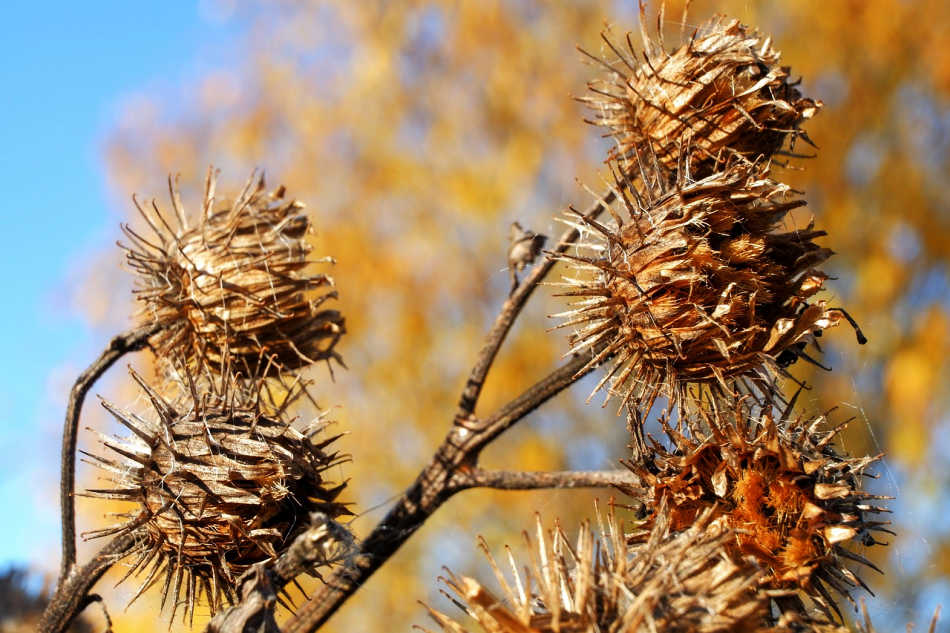
- Burs: Perhaps the most distinctive feature of burdock is its seed heads, often called burs. These are round, prickly, and covered in hooked bristles. The burs are designed to stick to the fur of animals, allowing the plant to spread its seeds. They are often brown or burr-shaped.
- Root: Burdock plants grow from a single taproot, which is long, slender, and can grow quite deep into the ground. It has a brownish-gray outer skin and a white or pale inner flesh.
- Habitat: Burdock plants are often found in disturbed areas, such as along roadsides, in fields, and near the edges of forests. They tend to prefer well-drained soil.
- Smell: Some people describe the crushed leaves of burdock as having a somewhat earthy or musky odor.
- Size: Mature burdock plants can be quite large, with leaves that can span up to a foot in width and 2-3 feet in length, depending on the species.
Now, if you’re like me, reading about a plant’s characteristics is all well and good, but I’d prefer to see the plant to really get an idea of what it looks like. So I did some digging (or scrolling rather), and I found a couple of great YouTube videos that also show how to identify burdock if you prefer visuals as I do. The first one is from Trillium: Wild Edibles and gives an excellent overview of burdock, and the second video is from Will Forage for Food, which shows the difference between burdock and look-alike plants, such as rhubarb (Rheum rhabarbarum) and skunk cabbage (Symplocarpus foetidus).
If you’re curious about harvesting burdock, I found a couple of videos that are really helpful. The first is from herbalist Yarrow Willard, who shows his preferred method of harvesting the root of first-year plants, and then the next is from Holistic Mitten, who shows us how to harvest the seeds from second-year plants.
Okay, now that you know how to identify and harvest burdock root, let’s shift gears and talk about how to put it to use in your home apothecary.
Burdock Root Preparations
Where food is concerned, burdock is often sliced and roasted alongside other root vegetables, fried in stirfry, added to soups, and even sliced in strips and pickled (small burdock roots are great for this!).
Again, I pursued YouTube to find some informative videos for you to show you some of this in action. This first video from chef Shawn Adler will not only show you how to identify and harvest burdock, but how to make delicious fried burdock chips as well, and the second video is from Daniel Delaney all about how to pickle burdock root.
Now, if you’re looking to use burdock root for more of its therapeutic qualities, fresh burdock root tinctures are commonly used as are burdock teas. You can watch Simply Josephine as she makes a fresh burdock tincture and dries her remaining burdock root to use in her nourishing herbal infusions later on in the video below. If you want directions on how to make herbal tinctures and infusion, visit my Using Herbs page.
Now that you have some ideas for common herbal foods and preparations that use burdock root, let me share some of my personal favorite recipe (used two ways) with you.
More Burdock Root Recipes to Try
Gut Love Decoction
This decoction is packed with polysaccharide-rich herbs that work to feed the healthy bacteria in your digestive tract, helping to improve your digestion, immune system, and mood – all at the same time.
Ingredients:
- 1 tbsp chamomile flower
- 1 tbsp burdock root
- 1 tbsp dandelion root
- 1-3 tsp licorice root (depending on your preferences for its flavor and sweetness)
*Mountain Rose Herbs is my go-to online source for organic, sustainably harvested herbs.
Directions:
Place the roots (burdock, dandelion, licorice) in a saucepan, and cover them with 4 cups of water. Bring the mixture to a boil over medium-high heat. When the mixture comes to a boil, reduce the heat to a simmer. Hold this temperature until the liquid looks like it has reduced by half (approximately 2 cups). Turn the heat off and add the chamomile flower. Mix well and place a lid over the saucepan. Let this mixture steep for 3-5 minutes to prevent the chamomile from becoming too bitter. Pour the mixture through a fine-mesh strainer, composting the used herbs and reserving the liquid for your tea. Drink 1 cup daily, storing the extra decoction in the refrigerator to drink the following day (store extras for no more than 48 hours before making a new batch).
* Do not use licorice root if you are pregnant, or if you have high blood pressure, congestive heart failure, or kidney disease.
Gut Love Electuary
Enjoy this same formula as a tasty herbal treat. Electuaries are made using powdered herbs and raw honey, and you can eat them directly off the spoon or add them to foods, such as smoothies, toast, and fruit dip.
To turn this formula into an electuary, simply purchase the herbs in powdered form (or powder them yourself) and mix them with enough raw honey to create a paste (the consistency is up to you) to use in whatever way you wish. Electuaries are shelf-stable preparations and should be used within 6 months.
Alright, friend! I not only hope you found this article very helpful, but I hope you’ll keep an eye out for burdock this autumn and try incorporating the autumn-harvested root into your herbal practice so you can see what it does for you!
Love and light,
Meagan