


I was out on one of my after-lunch walks several weeks ago, and I ventured over to a gnarly old black pine (Pinus thunbergii) on our property and found the most beautiful blob of pine resin I’ve ever seen.
Pine resin, also called pitch, seeps out of the cuts and scratches of trees and acts as a scab to seal the wound and prevent an infection from setting in thanks to its antibacterial and antifungal properties. If the wound is fresh, the resin will be thin and watery — a meer sap — but over time, the water evaporates leaving the sticky resin behind. As time goes on, this resin hardens up as the tree heals itself. The resin will eventually dry to the touch and feel leathery on the outside, but it will be quite gooey on the inside. Once the resin completely dries, it will look like an amber-colored blob that is quite hard and not sticky to the touch. Both stages of resin can be harvested. Just be careful with the sticky variety as it will stick to everything, and it’s very difficult to get off. Thankfully, high-proof alcohol or rubbing alcohol will do the trick!
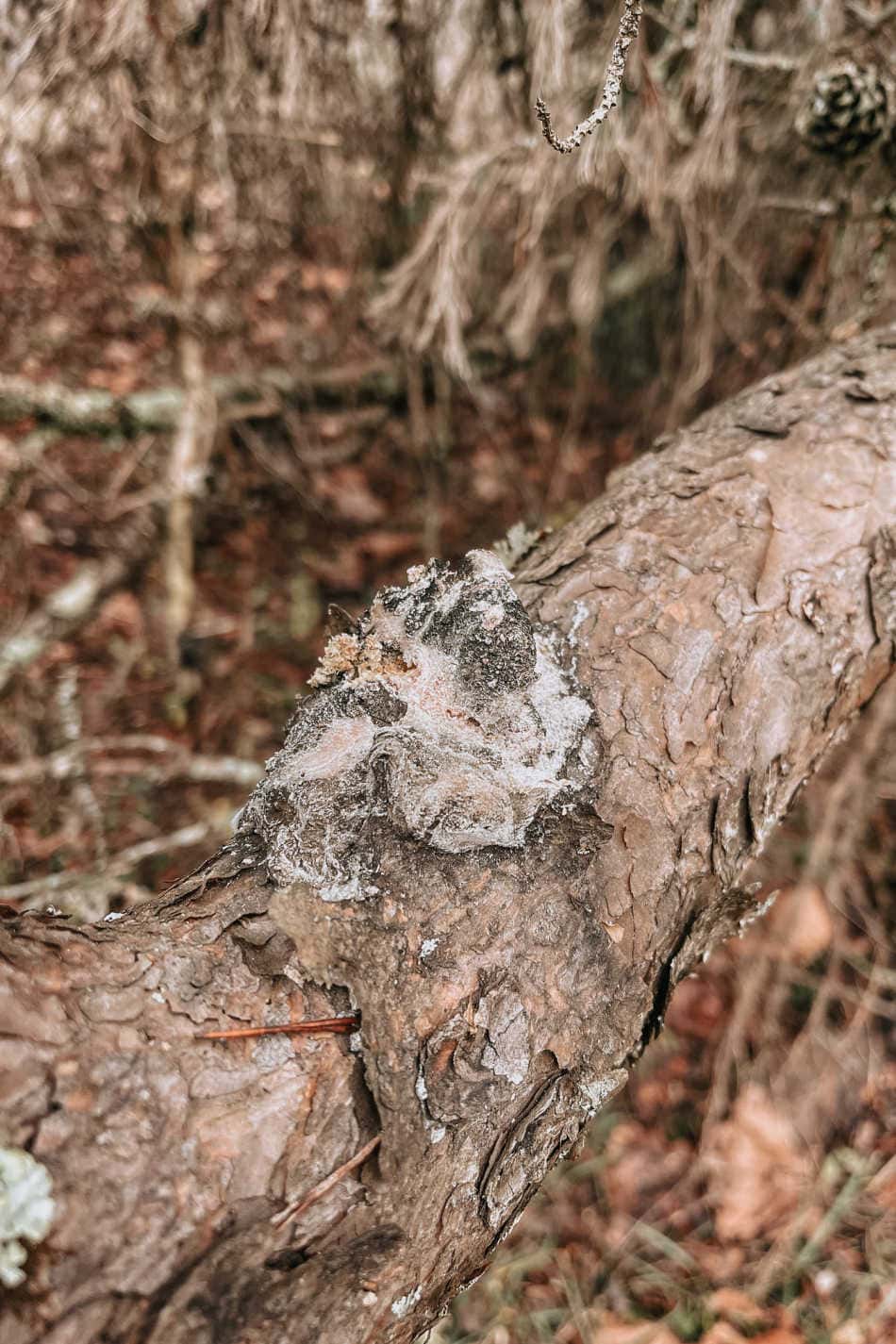
Pine resins are well-known for their antimicrobial properties thanks to their volatile terpene compounds, and they’re also soluble in both high-proof alcohol and oil, so I decided to take it home and make a fresh all-purpose salve with it, as that’s one herbal preparation I like to keep stocked in my natural medicine cabinet year round.
Pine Resin Properties
Pine resin has many external uses, most of which are used for first-aid. It can be used on wounds, to extract splinters and other embedded objects, and to draw out poisons from insect bites. It is also helpful for easing muscle aches and inflammation in joints as well.
I mainly wanted it for its antimicrobial properties as my boys are constantly coming home with cuts, scrapes, and scratches. However, knowing that it is also helpful for insect bites, embedded objects, and sore muscles is good to know too.
Harvesting Pine Resin
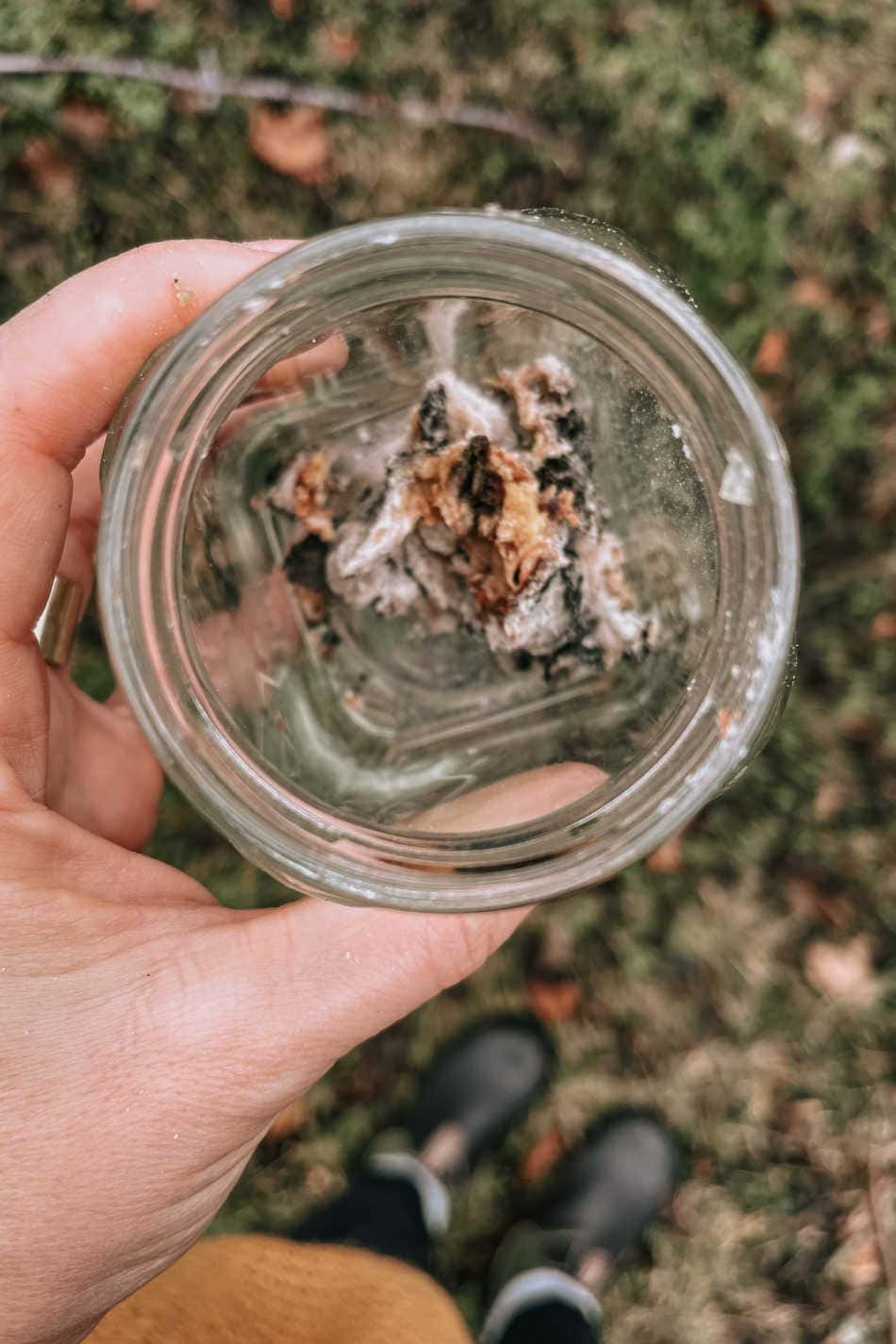
To harvest the resin, I used a butterknife to scrap the sticky glob from the tree, transferring it to a clean, dry glass jar. It was that simple. For thoroughly hardened resins, it can simply be broken or chipped away from the bark and transferred to a jar. To clean the butterknife, I rubbed it down with rubbing alcohol and washed it in the dishwasher.
Infusing the Resin in Oil
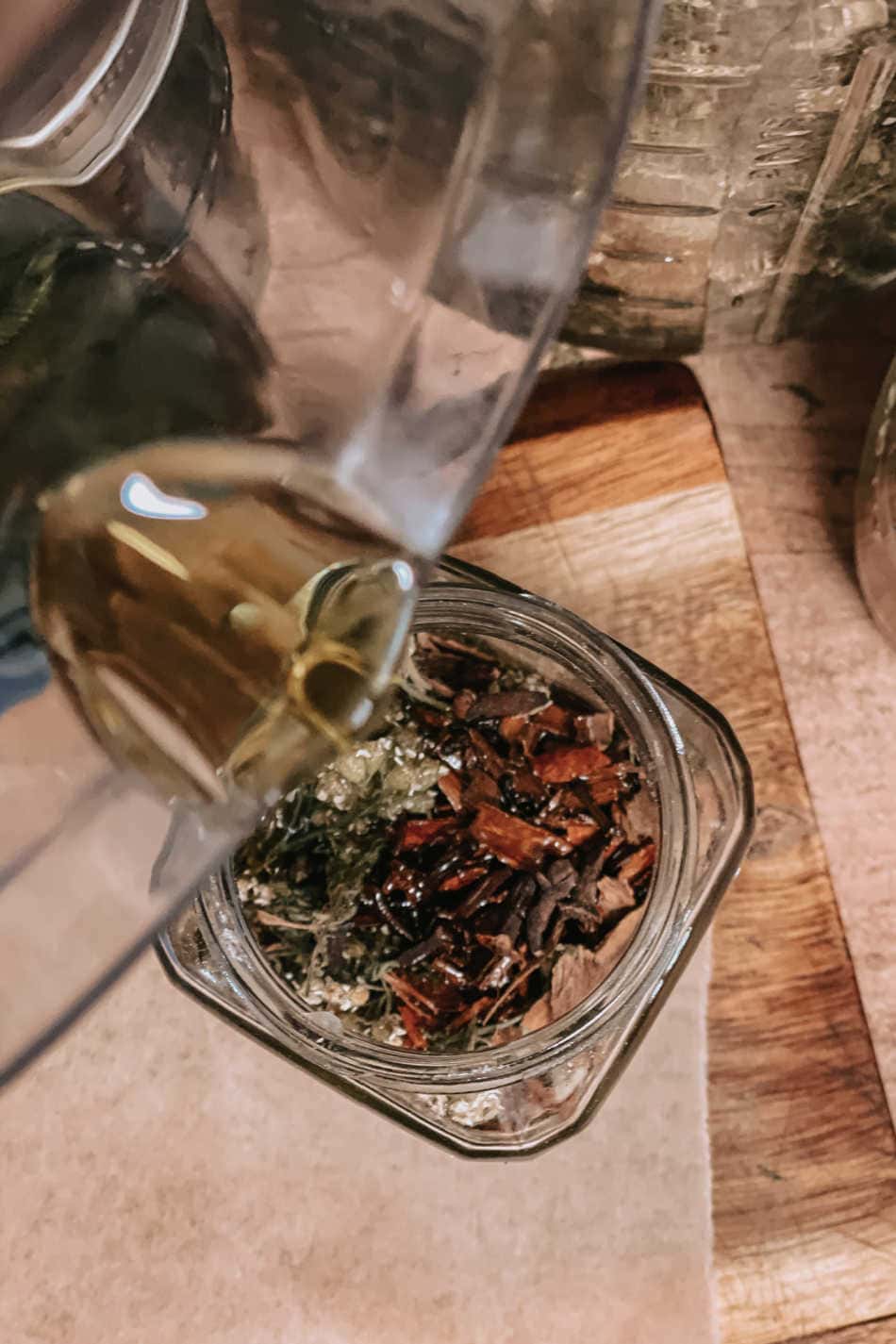
Infusing the resin in oil takes some patience, especially if it’s fully hardened. It’s best to use a double boiler to gently heat the resin in the oil until it has completely melted. It can also help to break the resin into smaller pieces before adding it to the oil. You can do this by placing the hardened resin between two pieces of an old cloth and breaking it into smaller pieces with a hammer. Since the resin I was using was soft, it melted into the oil fairly quickly.
Resins can also be dirty as bugs and bits of bark can get trapped in it. However, there is an easy way to filter the debris. After you have dissolved the resin in the oil, filter the mixture through a fine-mesh sieve or a coffee filter (if you have the patience) to remove the debris. Don’t forget wash the sieve with some alcohol to remove any sticky resin that remains on it.
All right! So that’s my experience with finding pine resin and infusing it into oil. Now, for my Winter Wound Salve recipe!
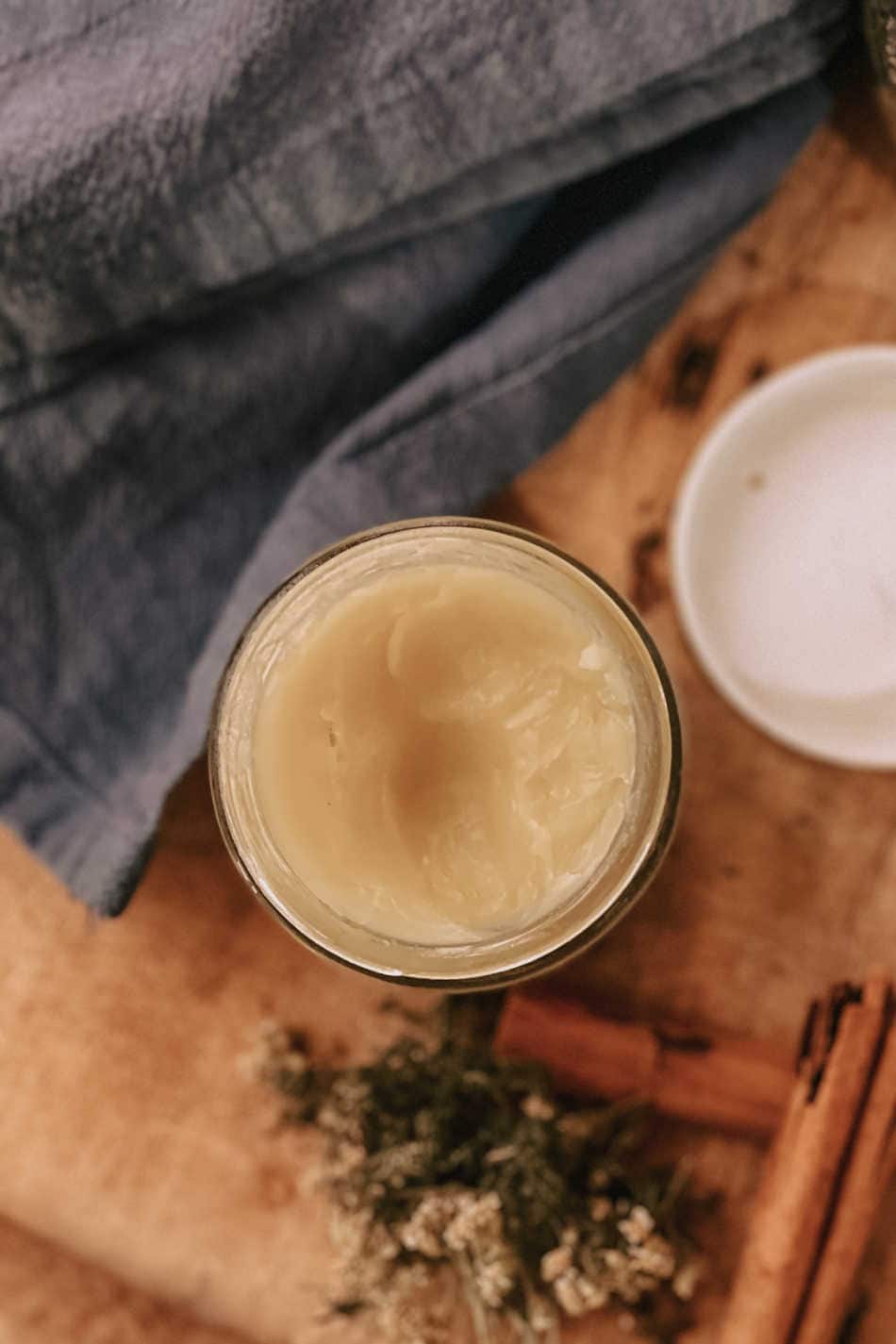
Winter Wound Pine Resin Salve Recipe

BOTANICALS::
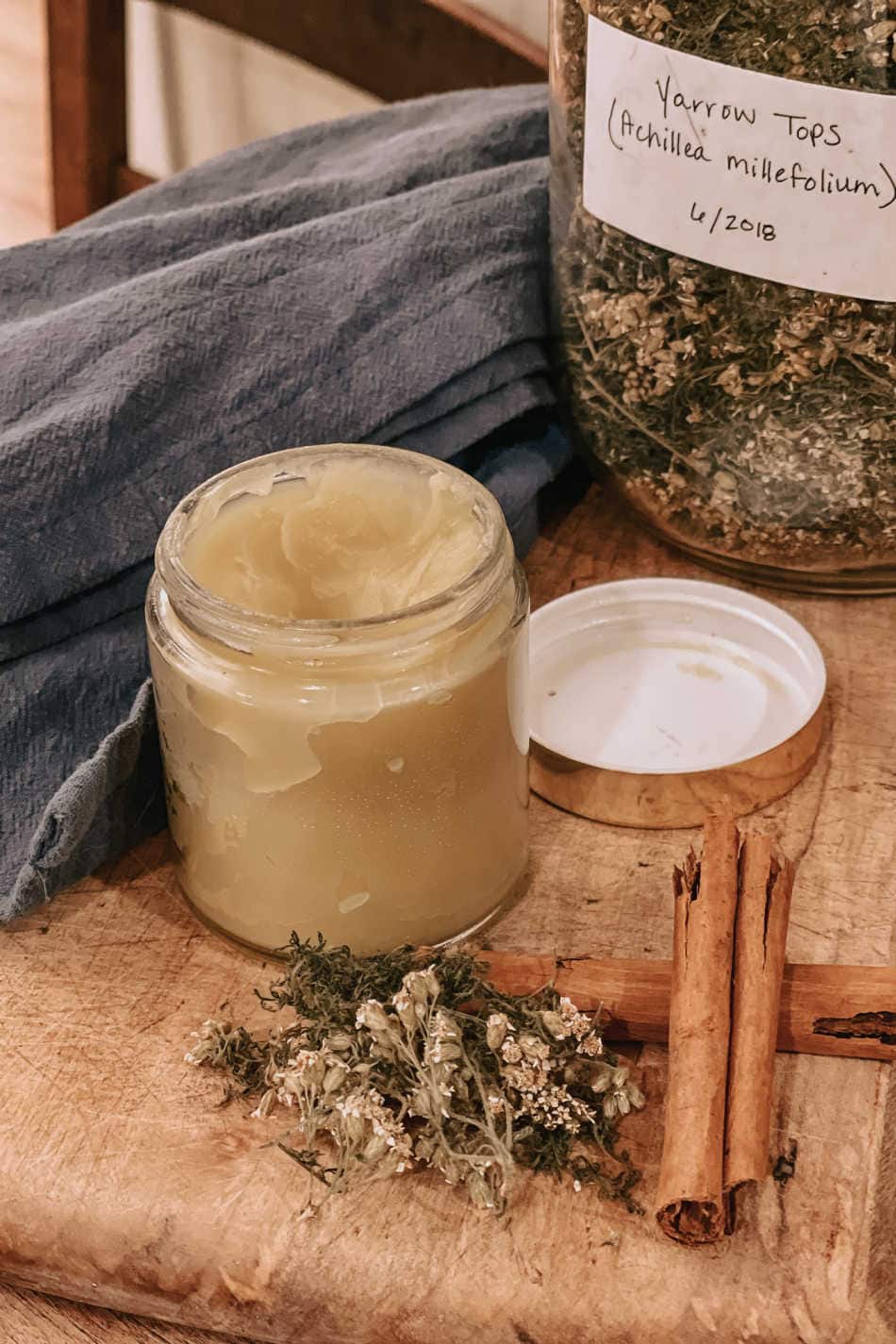
- 1/4 cup total of pine (Pinus spp.) resin, yarrow (Achillea millefolium) flowers, cinnamon (Cinnamomum spp.) bark, and whole clove (Syzygium aromaticum) buds (you choose how much of each)
OTHER INGREDIENTS::
- 1/2 cup+ of extra virgin olive oil (enough to cover the botanicals by 1 inch)
- 1/2 cup+ of beeswax (enough to give you the desired salve consistency)
DIRECTIONS::
- Add water to the lower portion of a double-boiler and bring it to a boil.
- Combine botanicals and oil in the upper portion and place on top of the lower portion once the water is boiling.
- Heat the liquid until the resin has completely melted (60 minutes minimum), stirring occasionally.
- Carefully double strain the liquid through a fine mesh sieve, followed by and unbleached coffee filter to remove plant particles. Compost plant material.
- Add beeswax to a clean sauce pan and melt over low heat.
- Once melted, add botanical infused oil to the liquid beeswax.
- Test salve consistency by dipping a spoon in the liquid and pouring a small amount on a clean glass plate. Set this aside to cool, then test the hardness by pressing it with your finger. If it’s too soft, add a bit more beeswax. If it’s too hard, add a bit more oil.
- Once the consistency is where you want it, remove remove from heat, and quickly pour into glass jars or tins.
- Set jars or tins aside to cool slowly.
- Label and store for up to 12 months.
And that’s it! May all your winter boo-boos be kissed with botanical bliss!
Love and light,
Meagan