



Have you ever tried to make a ratio tincture before and found that there just wasn’t enough solvent to cover the plant material? (I’m looking at you arnica flower, mullein leaf, calendula flower, mugwort leaf, and rose bud (and others)!)
If so, you’re not alone. I’ve been there many times, and it can be a frustrating and confusing place to be, especially when you’re new to making ratio tinctures and you don’t want to waste your ingredients.
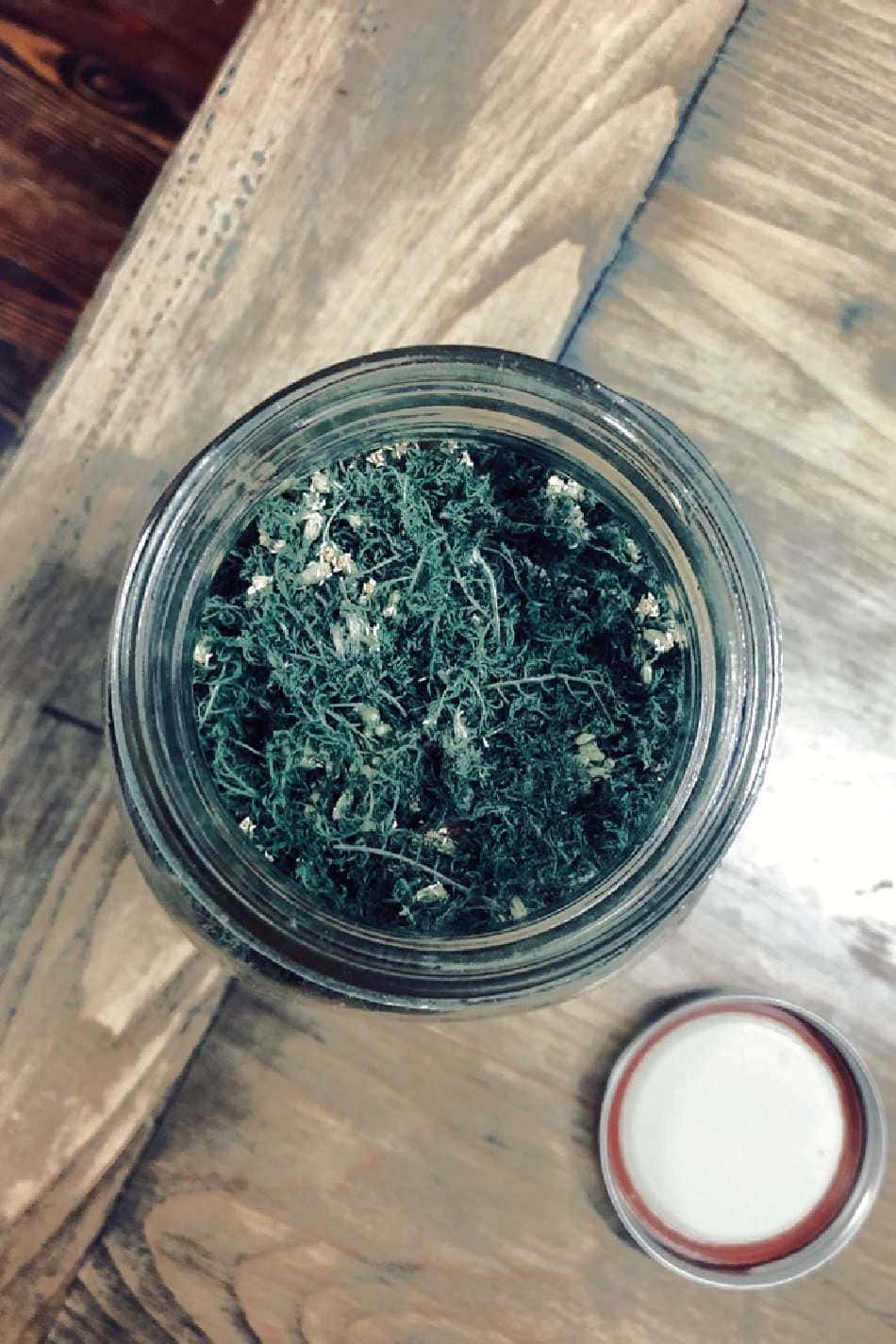
The problem comes down to some herbs being too “fluffy” to cover with the measured amount of solvent adequately.
So what are you to do? You know that you need enough of your solvent to not only thoroughly extract the constituents from your plant material but also to preserve the tincture so it doesn’t mold or grow bacteria while it macerates.
If you’ve ever dealt with fluffy herbs when making a ratio tincture, this article is for you. Here I will share three ways you can troubleshoot fluffy herbal tinctures and work toward getting your solvent to cover your plant material so you can get a good extraction with proper preservation.
Ratio Method Tinctures
Before I get into ways to solve the “fluffy” herb issue, let me first explain what a ratio tincture is if you’re unfamiliar with that term.
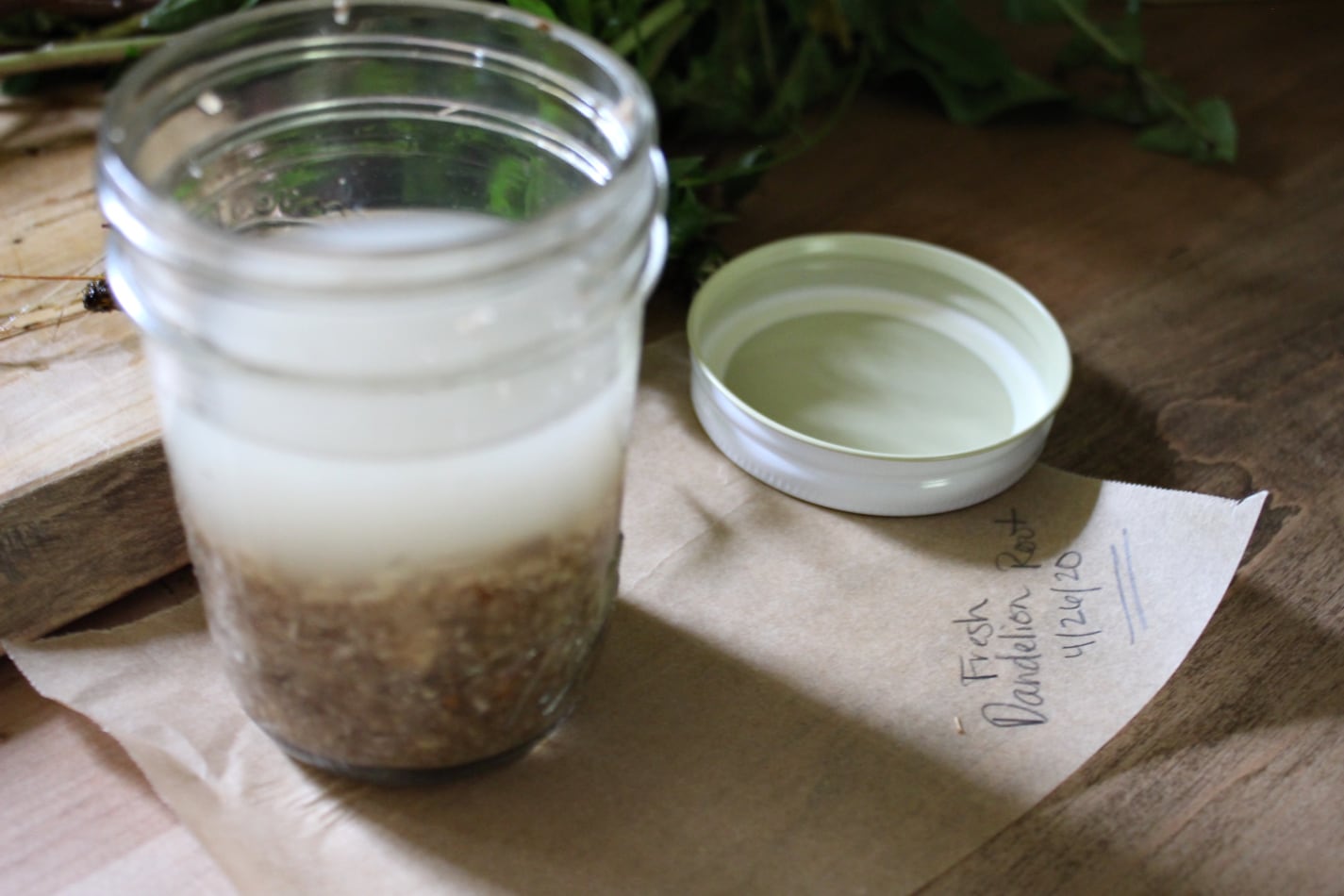
The ratio method is the standard method of making herbal tinctures. This method uses a ratio of plant material to solvent to create various extraction strengths, and the ratio will vary for each plant.
Most herbal tinctures made with dry plant material are made at a 1:5 ratio, with one part dried herb by weight to five parts menstruum by volume. Your part can be any measurement of your choosing, such as an ounce, a gram, a tablespoon, or a cup. For example, combining two ounces of licorice root in 5 fluid ounces of alcohol. Tinctures made with fresh plant material are often made at a 1:1 or 1:2 ratio (often called extracts because they’re so concentrated) and are made with one part fresh herb by weight to one or two parts menstrual by volume.
The benefit to making and using ratio tinctures over folk tinctures is that the tincture will turn out the same strength each time you make it, which means your dosage will be the same each time. In short, ratio tinctures are predictable, and that can often be a good thing.
The problem with some ratio tinctures, however, comes down to this. When you make a 1:5 ratio tincture, you weigh out one part of dried herb and cover that with 5 parts by volume of the liquid you are using (vinegar, alcohol, glycerin). However, you might find that 5 parts of liquid isn’t enough to cover fluffy herbs, like those mentioned at the beginning of this article.
For example, if you’re making a mugwort tincture, you would weigh out 1/4 oz of dry mugwort leaf, and then you would measure out 1 1/4 oz of alcohol. However, when you pour the alcohol over the plant material, you will find that there is nowhere near enough to cover it. It’s like the dry mugwort leaf sucks up all the liquid, and none is left to cover the plant material sufficiently. This will lead to a few problems. One, you might not get a great extraction; two, you might not have enough alcohol to preserve the tincture; three, you barely get any tincture after the maceration period because all the liquid is stuck in plant material.
So, if you find yourself in this situation where you’ve made a ratio tincture, and once you’ve poured the solvent over the plant material, found there’s not enough of it, here are a few ways to troubleshoot the “fluffy” herb problem.
Three Ways to Troubleshoot “Fluffy” Herb Tinctures
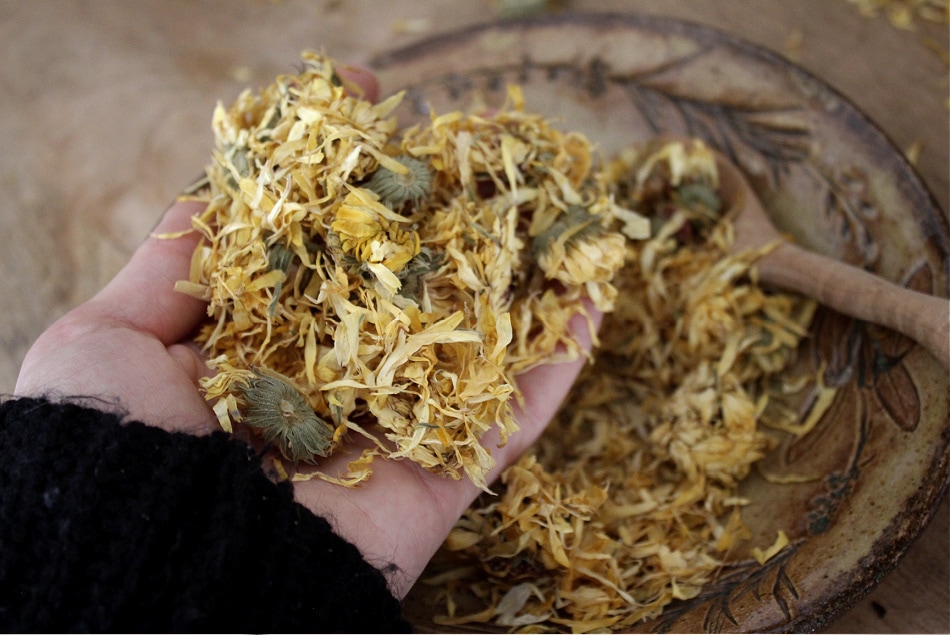
If you’re working with herbs that are too large in volume to be covered by the solvent when making a standard ratio tincture, here are a few alternate methods you can try.
- Double Maceration Method
- The Blender-Smoothie Method
- The Weighted Method
Double Maceration Method
If you have more plant material than solvent when making a ratio tincture, one way to troubleshoot the lack of liquid is to use the double maceration method.
To do this for a 1:5 ratio:
- Begin by combining one part dried “fluffy” plant material by weight to 10 parts by volume of your solvent. Let this mixture sit for two weeks and strain. This menstruum is now a 1:10 ratio tincture.
- Next, remake the tincture using another one part of dried “fluffy” plant material and 10 parts by volume of solvent. Only this time, you’ll use the 1:10 ratio tincture you just strained as the solvent. You may need to add a bit of fresh solvent to get precisely 10 ounces. Let this mixture sit for at least an additional two weeks, strain, and voila! The final product is now a 2:10 (and therefore a 1:5) ratio tincture.
For example, say you want to make a calendula flower tincture. Using a kitchen scale, weigh out 1 ounce of calendula flower and place it in a clean glass canning jar. Next, measure 10 fluid ounces of alcohol in a glass measuring cup, and pour it over the calendula flower. Cap, label, shake well, and store this in a cool, dark location for two weeks, shaking daily if possible. When time is up, strain (and squeeeeezzzzeee) the liquid from the calendula flowers (a tincture press can come in really handy here) and set it aside. Weigh out another 1 ounce of calendula flower and place it in a clean glass canning jar. Next, measure the amount of calendula tincture you previously strained in a glass measuring cup and add more alcohol, if needed, until you reach 10 fluid ounces. Pour the liquid over the calendula flowers. Cap, label, shake well, and store this in a cool, dark location for 2-4 more weeks, shaking daily if possible. When time is up, strain (and squeeeeezzzzeee) the liquid from the calendula flowers. Now you should have a 1:5 ratio tincture. Transfer to a labeled storage bottle for use.
The double maceration method is also great to use when tincturing dried herbs that have lost some of their potency due to age. Simply make a standard 1:5 tincture and then reuse the strained tincture as the solvent for a second batch with more herb.
The Blender-Smoothie Method
Another option when you have more plant material than solvent is to use the blender-smoothie method.
To do this for a 1:5 ratio:
- Place 5 parts of measured solvent in a blender and turn the blender on.
- Slowly add a small amount of the weighed plant material, a little at a time, carefully through the lid opening of the blender. If your blender lid doesn’t have this option, turn the blender off, add a small amount of your herb in with the solvent, put the lid on, and blend it. Repeat this until all of the plant material has been added and blended.
- This method creates a smoothie-like consistency (like a thick green pudding) that will not only help mix all of the plant material with the solvent, but it will increase surface area at the same time, yielding a better extraction.
The Weighted Method
Lastly, the weighted method may be a good option for you when you find your solvent isn’t covering your plant material well enough.
To do this for a 1:5 ratio:
- Make a 1:5 tincture as usual.
- If the herb is sticking up above the level of the solvent, use a fermentation weight, small plate, water-filled glass jar, or a well-cleaned rock on top of the herb to push it back down under the solvent level.
Finally
Now that you know three different ways to troubleshoot “fluffy” herb tinctures, let me encourage you to give each of these a try the next time you’re making a ratio tincture and find you don’t have enough liquid solvent to properly cover the plant material. The more you practice these methods, the easier they will become, and before you know it, you’ll find your favorite go-to method to help you deal with “fluffy” herbs.
Love and light,
Meagan