



The longer I live, the more I find that moderation — or living between the lines in this space of not too much and not too little — is a good, healthy place to be.
Today I’d like to share what that looks like in spring.
You see, we are smack dab in the middle of the spring season at this point in the year. As May Day approaches, we will begin to transition out of spring and into summer, so I think now is a good time to look at the balance and imbalance of the spring season.
I find that when I look back on things as a whole, it’s easier for me to see clearly. I mean, there’s a reason for the “hindsight is 20/20” saying. Right?
Anyway, below I’m going to share what it looks like to live in a place of balance during spring followed by two different types of imbalance we can find ourselves slipping into during this season as well. After reading through this information, feel free to do your own personal spring review and decide where between these lines you think you’ve been living mostly this season.
What Balance Looks Like in Spring
Spring is the first official season of the year, and it begins with the Spring Equinox. Spring centers around the element of Wood (or Air) and the liver and gallbladder organs. It’s linked to our mornings (since they are the first part of our day) as well as infancy and childhood (since this is the first part of our life after birth). Spring is a time of hope and determination, growth and strength, flexibility and adaptation, experimentation and curiosity, drive and vision, and becoming that person you want to be (this links to the values and plans you made during winter). In spring, our energy rises from that resting place of Winter. It moves upward and outward, increasing week after week, slowly seeking.
Now that you know what spring is about, let’s look at what balanced living looks like during this season.
Creating “The Big Picture”
In spring, we remember back to all the self-reflection we did during winter, and we envision how we want our year to look as we move forward. We lay all of this out, sort of creating a big picture of us, the world, and our part in it for the coming year. At this point, we don’t know exactly how we’re going to make this big picture happen, but we do have some ideas. Spring is all about testing and experimenting, working our way from point A to point B.
Creating this big picture is one of my favorite parts of spring. I feel so inspired and excited about what’s to come! A lot of times, I like to create a mood board (Pinterest is great for this) of how I want to feel and what I want to do. It helps me to visualize the big picture and the feelings it should evoke. A lot of times, it’s hard not to jump right in and try to make this vision happen right away. I have to continually remind myself that this isn’t the time for action — it’s a time for planning and preparation.
The Nitty-Gritty Plan
Once we can see the big picture of where we want to go, we need to determine the steps to take to start us on this journey of getting from where we are to where we want to be. Laying out this path is the nitty-gritty part. It’s in this part of the planning process that people often get overwhelmed and want to give up. It’s as if we want to get from point A to point B immediately, but you know, it takes some work to get there and not all of that work will be fun. Often, it can be hard. Chinese philosopher Laozi once said, “The journey of a thousand miles begins with a single step.” I think that is very applicable to spring.
Once you have your big picture in mind, ask yourself what the first thing is that you need to do to get closer to that end goal? When you know what that is, do it. Plan it out. Write it down. Make it happen.
Sometimes, it can be easier to plan things out in reverse. Start with your big picture and work your way back to where you are now. If at any point in getting from point A to point B you realize you forgot to add a step, just add it in.

Structure & Flexibility
This whole process of big-picture planning and laying out the steps to make this picture come to life requires both structure and flexibility, and it’s in this space between the two that balance is found.
Let’s use a tree sapling for an analogy.
Saplings need both structure and flexibility to grow into sturdy trees. This structure allows them to grow deep roots and a straight trunk, while flexibility allows them to bend with the wind as it blows. If the sapling isn’t flexible, it will break. The same is true for your plans. You need a structure to get from point A to point B — a path to follow, but your path needs to have room for change or redirection. Paths aren’t set in stone. Sometimes, we find ourselves needing to stop, look at our big picture, reassess where we are and how to get where we want to go, and then change our path a bit.
Spring Balance Is Found In The Space Between
When you think about living a balanced life in spring, it will be found here, in this space between structure and flexibility — in having a vision for your big picture and in being able to follow your path, step-by-step while adapting to whatever comes your way, working around obstacles when needed.
This balance requires boundaries with our time and energy. These boundaries should be set but movable. Balance also allows us to be assertive. We know where we want to go, and we are moving in that direction. A balanced person will also be decisive when it comes to making decisions. It’s entirely reasonable to weigh both sides of an issue (the pros and cons), but a choice should be made rather quickly.
What Imbalance Looks Like in Spring
Now that you know what balance looks like during spring, let’s transition to the opposite side of things and look at what imbalance looks like during this season. I’ve already mentioned how balance is living between the lines of structure and flexibility, but let’s look into these two sides of the spectrum more closely to get a better idea of how being too structured or too flexible can leave us living imbalanced during this season.
Now, before we go here, imagine with me for a moment a see-saw at a children’s playground. (I think these are referred to as teeter-totters or tilting boards in Europe. Correct me if I’m wrong!)
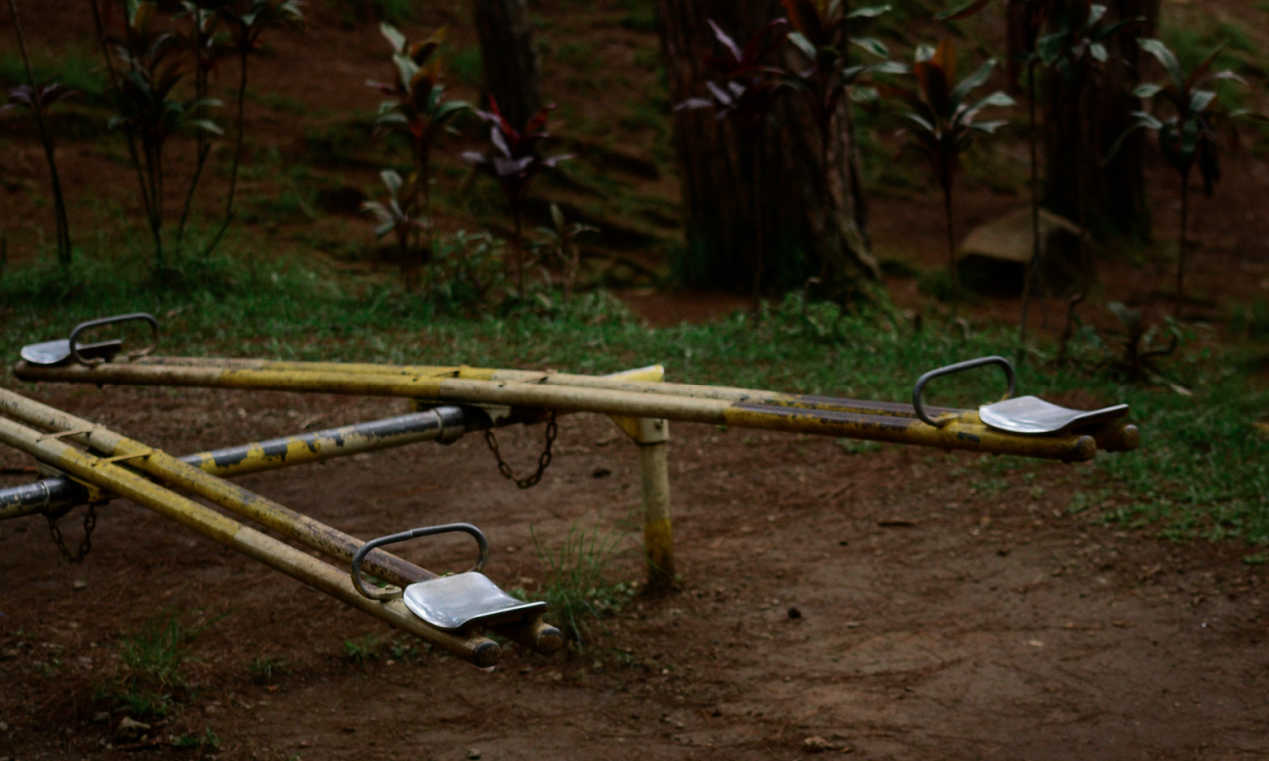
If both ends of the seesaw are suspended in the air and the board is balanced, that position represents living in balance during spring. However, if one end of the board is down on the ground and the other is up in the air, then the board is unbalanced and each end represents a different type of imbalance we can find ourselves in. The end of the board touching the ground represents an under-expressed imbalance (too flexible) and the end of the board that’s up in the air represents an over-expressed imbalance (too structured).
Let’s look at what these types of imbalances look like in our lives in spring.
An Under-Expressed Spring
When you are under-expressing spring, you are a bit too flexible and that inspired, creative side of you is lacking. Your boundaries, particularly the boundaries of time and energy, are very unstable or out of control.
While the word boundaries may feel stifling for some, boundaries are really good things and everyone has them to some extent. Boundaries help us feel safe and secure, they help us focus on our vision, and they help us to know who we are. Basically, boundaries provide structure for us.
Without boundaries, we can feel very vulnerable and insecure. We find it difficult to make or stick with decisions, we feel a bit lost or unsure of where to go, and we feel very overwhelmed by our lack of control. Basically, we’re unstructured, and there’s nothing holding us up.
While creating boundaries is something we all need to do, there are outside factors that affect those boundaries. Two things initially come to mind. Work and kids.
While we can set boundaries for ourselves, sometimes those boundary lines must shift a bit when work or family needs come up. If we’re fully expressing spring — or balanced during this season — we’ll easily be able to know where our limits are or when to move our boundary lines for a time. However, if we’re under-expressing spring, we’re going to feel very lost and unsure of what to do when our routine changes. We’ll probably feel overwhelmed, out of control, and like we’re being pulled along for the ride.

Having a lack of creativity is another sign that you’re under-expressed in spring. And no, I’m not talking about the fact that you stink at drawing or playing the piano. I’m talking about creative problem solving — thinking outside of the box, so to speak.
Oftentimes, this lack of creativity is in the form of a clouded vision. Remember that living in balance during spring allows us to have a clear vision of who we are (that person we want to be) and where we want to go? Well, if we aren’t fully expressing spring and living in that balanced place at the moment, sometimes the vision of who we are and where we’re going becomes clouded, and we begin to wonder why we’re even doing the things we’re doing — as in, what’s the purpose?
Am I right? Have you ever felt this way? I know I have. Spring is one of the more difficult seasons for me to stay balanced in. I know I’ve told you before that I’m naturally a type-A person, so spring is my season — the season of Wood, and I have a hard time staying balanced during this season. It’s as if I’m either too flexible (unstructured) or not flexible enough (overly structured). However, knowing this about myself, as well as knowing what these imbalanced states look like in my life, has really helped me to catch myself if one side of my seesaw begins to get out of balance in some way.
Now let’s look at the other side of spring imbalance — an over-expressed spring.
An Over-Expressed Spring
Someone who’s showing signs of over-expressing spring will be very rigid, structured, and extremely focused. They will be inflexible and overly self-sufficient. These people typically have type-A personalities and are very driven to succeed.
This type of imbalance often comes when we know where we’re headed, and we know the steps we need to take to get there. However, we become too focused on these steps — so focused that we put blinders on in order to not get distracted. We basically strap ourselves to our path (or to-do list), and we won’t leave it come hell or high water.
This type of focus is no longer the productive type of focus. Instead, it’s suffocating and stifling. When obstacles come (and they always do), someone who’s over-expressing spring has a hard time dealing with those obstacles in a healthy manner. Their tendency is to push through that obstacle, no matter what, often relying on themselves to overcome it instead of seeking outside help.
When people are over-expressing spring, they tend to be hard-headed, self-reliant, and intense. They can carry tension in their neck and shoulders, and they’re often blunt with their words. It’s easy for a person who’s over-expressing Spring to get stuck here because they’re getting things done and they’re in this place of, “first this, then that, and that, and that.” They can feel like they’re accomplishing a lot, and while they may be, it’s coming from a place of pushing themselves, which eventually, leads to becoming worn out.
The Winter-Spring Connection
Now that you know what it looks like when living in a place of balance as well as what the two different sides of imbalance look like, there’s one more point I’d like to make before closing. Hopefully, this point will show you how balanced living in one season ties into the next.
If you get my bi-monthly emails and you read through the winter issues of my seasonal living mini-magazines, you will know that balance and imbalance in winter work just as it does during spring. But, if you’re just starting on this seasonal living journey and all of this living between the lines stuff is new to you, you may feel a bit behind. That’s because it takes the work of one season to really be fully balanced in the next.
You see, each season connects with the one that follows it. If you didn’t do the work of winter, then it’s hard to suddenly know who you are and where you want to go in spring (that big picture). Does that make sense?
Here’s the good news, though. Even if you weren’t pursuing seasonal living in winter, you can still do the work of spring here and now.
If you’re just now reading this or you’re just now deciding to incorporate seasonal living into your life, you can start here in spring. In fact, I’d encourage you to because you’re going to need to do work here in order to be balanced come summer.
Do you have a goal that you’d like to accomplish before the end of the year? Maybe it’s a job promotion. Maybe it has something to do with your home. Perhaps it’s a personal goal like eating healthier or exercising daily. Whatever it is, or whatever you want to do, ask yourself why you want to do it and try to identify the steps you’ll need to take in order to make it happen. This will prepare you a bit for summer — the season of action!
Lastly, if you haven’t already, don’t forget to sign up to get my bi-monthly emails so you can get access to my Seasonal Living Collective — a resource library all about seasonal living and herbalism. Each month, you’ll find a new mini-magazine that will guide you through living in alignment with the seasons. If you enjoyed this overview of seasonal living in spring, you’ll love these magazines!