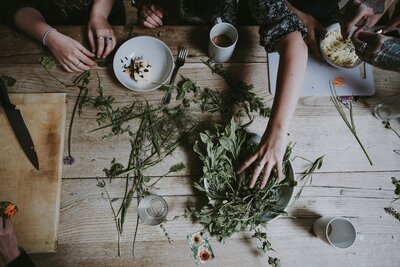
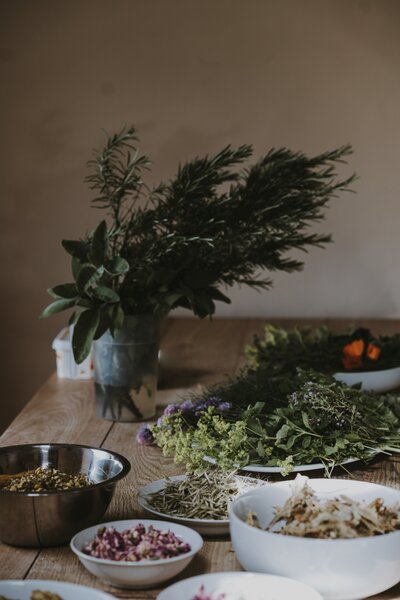




Earaches are the worst, especially when your kid has one. Last week, my youngest child came down with a fever that increased as the evening wore on, and he eventually began to complain about one of his ears hurting. Unfortunately, I didn’t have one of the go-to herbs I use when making my herbal earache oil, so I had to get creative and find a substitute.
Today, I’d like to share this alternate herbal earache oil recipe with you in case you, like me, find yourself needing it one day, and you, again like me, don’t have your go-to herbs on hand.
My Standard Herbal Earache Oil Recipe
I’m sure you’ve heard the saying, if it isn’t broke, don’t fix it. Well, the same is true for herbal recipes.
There are some herbal formulas that have been around for years and years. They work well, and they’re simple to make. So why change them?
When it comes to the traditional herbal earache oil formula, garlic (Allium sativum) cloves and mullein (Verbascum thapsus) flowers are the go-to. Both of these herbs are said to have antibacterial properties, and mullein flowers also have anti-inflammatory and anodyne (pain relieving) properties as well. This herbal combo has been successfully used throughout the years as a traditional earache remedy, and scientific studies have even shown this blend to be beneficial, even when tested in a double-blind study against one group of children receiving antibiotics.
Now, in my recent situation, I didn’t have any mullein flowers available, so I had to find a good substitute for this plant, which brings me to this next section about bioregional herbalism and learning how to make herbal substitutions.
Making Herbal Substitutions
The longer I practice and study herbalism, the more drawn I am to bioregional herbalism, which is basically where you learn to use the herbs available in your local area. Another benefit to putting in the work and learning more about the plants that grow in your area is that you get to know which plants can be substituted for other plants.
I’ve talked about how to make herbal substitutions in the past here on the blog, but let me encourage you to try not to get overwhelmed or discouraged if finding substitutes feels difficult for you. The more you study and get to know individual plants, the easier it will become.
When I realized I had used all of the mullein leaves I had harvested last summer, I knew I needed to find an herbal substitute that had anti-inflammatory and anodyne properties — bonus points if it was also antibacterial.
So what I came up with was replacing the mullein flowers with chamomile (Matricaria chamomillia) flowers, due to its strong anti-inflammatory action, and clove (Syzygium aromaticum) bud, due to its anodyne and antimicrobial actions.
Alright, so my final herbal earache oil recipe is below. If you find yourself needing a recipe like this for yourself or your kiddo, I hope this one comes in handly.
DIY Herbal Earache Oil: An Alternate Recipe
Ingredients::
- 2 medium cloves of fresh garlic (Allium sativum) cloves
- 1 teaspoon of chamomile (Matricaria chamomillia) flowers
- 1 clove (Syzygium aromaticum) bud
- 3 teaspoons of extra virgin olive oil
As always, all dried herbs are sourced from my friends over at Mountain Rose Herbs.
Directions::
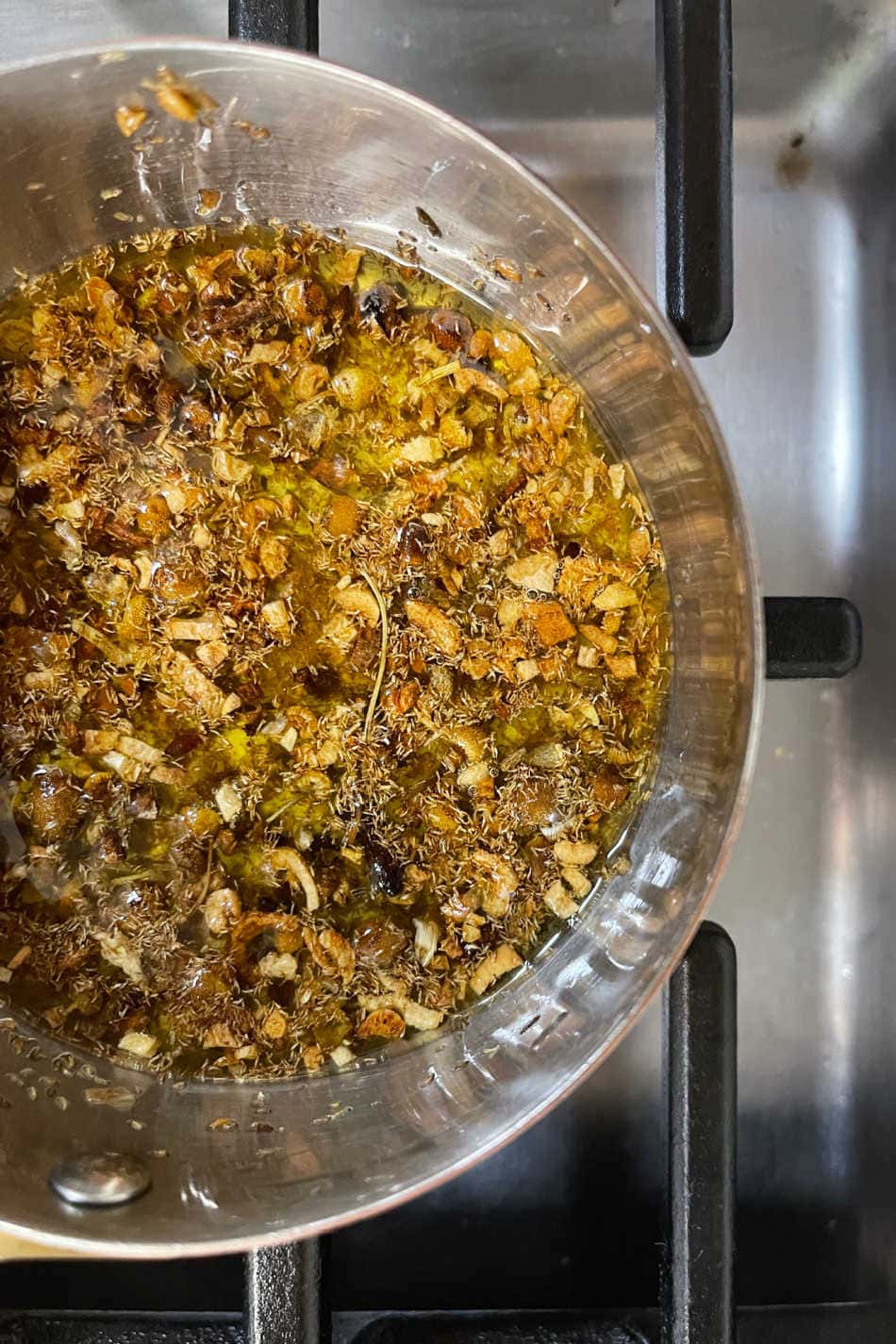
- Begin by finely mincing the garlic cloves and adding them to a small saucepan. Add in the chamomile and clove. Cover with your olive oil, and heat over very low heat for 30-60 minutes. You want the oil to warm so that the herbs simmer in it, releasing their constituents to the oil.
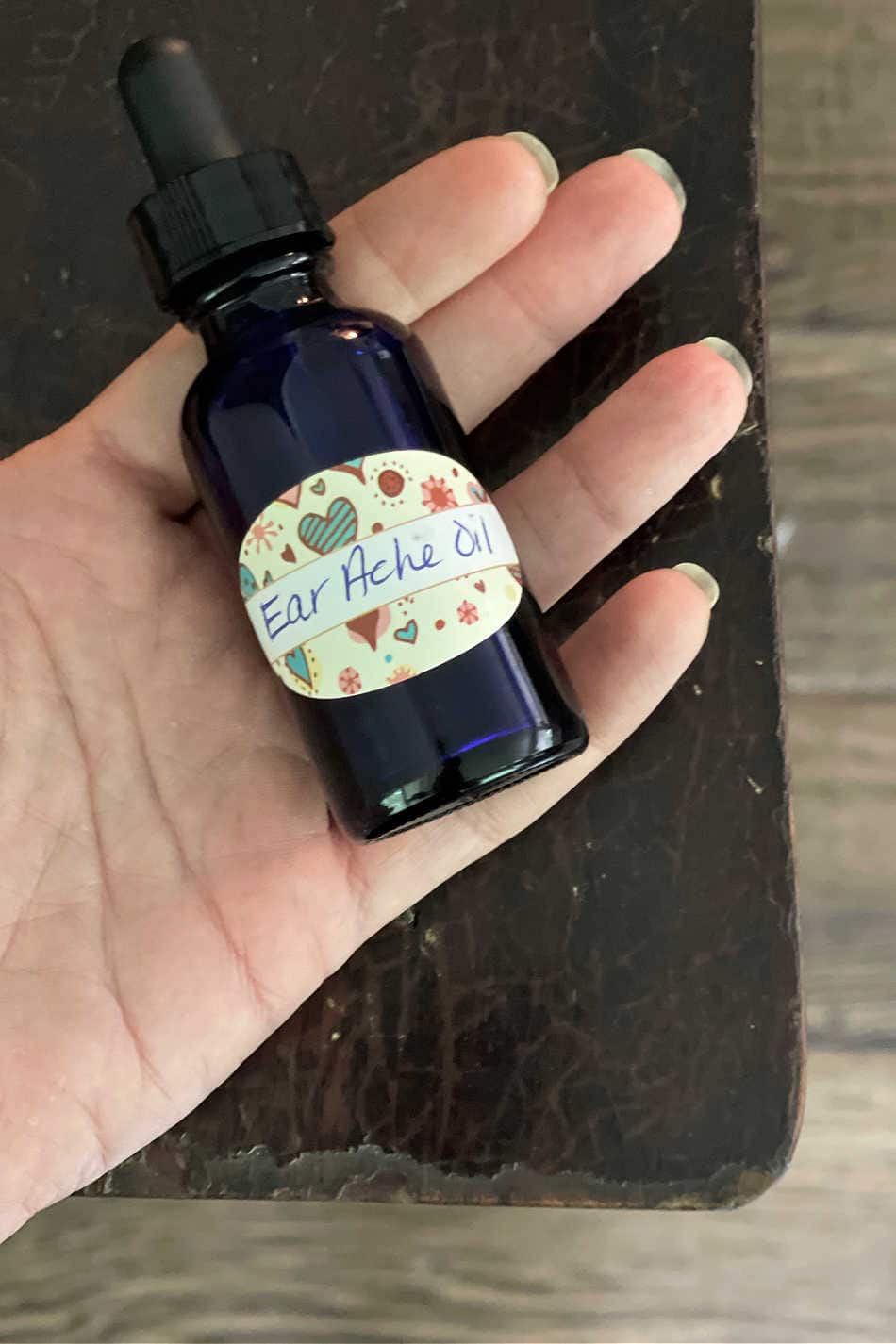
- When time is up, strain the mixture though a coffee filter-lined fine-mesh sieve to make sure all the little plant particles are removed. Compost the herbs and bottle the finished oil in a colored glass bottle with a dropper top.
Usage::
I like to put 2-3 drops in both ears 3-4 times a day for several days, even after the pain has subsided, to ensure the herbs are doing their job thoroughly.
More Ear Infection Recources
- How To Approach Ear Infections Naturally
- The Real Problem With Ear Infections In Kids Plus How To Make An Herbal Ear Infection Oil (Guest Post)
Hope you’ve found this recipe helpful friend, and if you have any questions, feel free to leave me a comment below. I’ll do my best to get back to you as soon as I can.
Love and light,
Meagan