





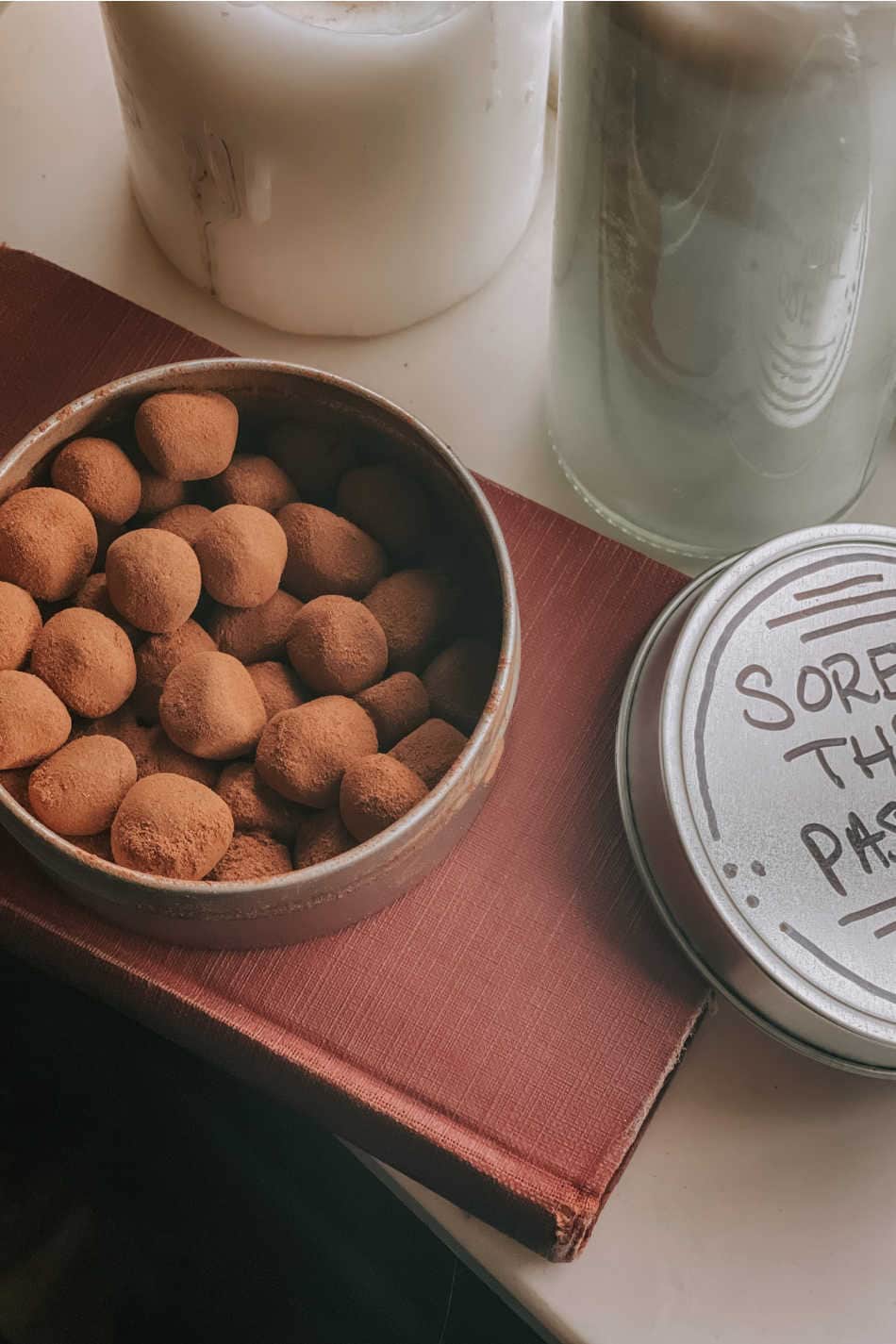
Autumn is a dry season, and with the temperatures changing back and forth from warm to cold so frequently, we can often suffer with a dry, sore throat.
I shared my go-to herbal formula for these sore throat pastilles a while ago over on my YouTube channel, but I thought I’d share an updated, condensed version here in the membership along with an explanation of the herbs I use in this formula.
Sound good?
First, the video and recipe.
Herbal Sore Throat Pastilles
Ingredients:
- 2 parts slippery elm (Ulmus rubra, U. fulva) bark powder (sustainably harvested)
- 1 part marshmallow (Althaea officinalis) root powder
- 1 part cinnamon (Cinnamomum spp.) bark powder
- A drizzle of honey
Directions:
- Combine herbal powders and honey in a clean glass bowl and mix until a stiff dough forms. Test dough and adjust for consistency, adding more herbal powder to create a stiffer dough or more honey for a softer dough.
- Once the dough is at the correct consistency to roll out little balls (pastilles), pinch off small pieces and roll the dough into dime-sized balls. Transfer the dough balls into herbal powder to coat them. I like to use cinnamon because it tastes good, but any flavorful herbal powder that suits your formula will work. Dust the dough balls in herbal powder and transfer them to a clean storage container. Add some additional herbal powder to keep them from sticking to one another. Label the container and store it in a cool, dark location.
- Use a pastille anytime you feel your throat is dry or sore, letting it dissolve in your mouth slowly.
Now that you know how to make this particular pastille recipe, let me share why I chose the herbs in this formula.
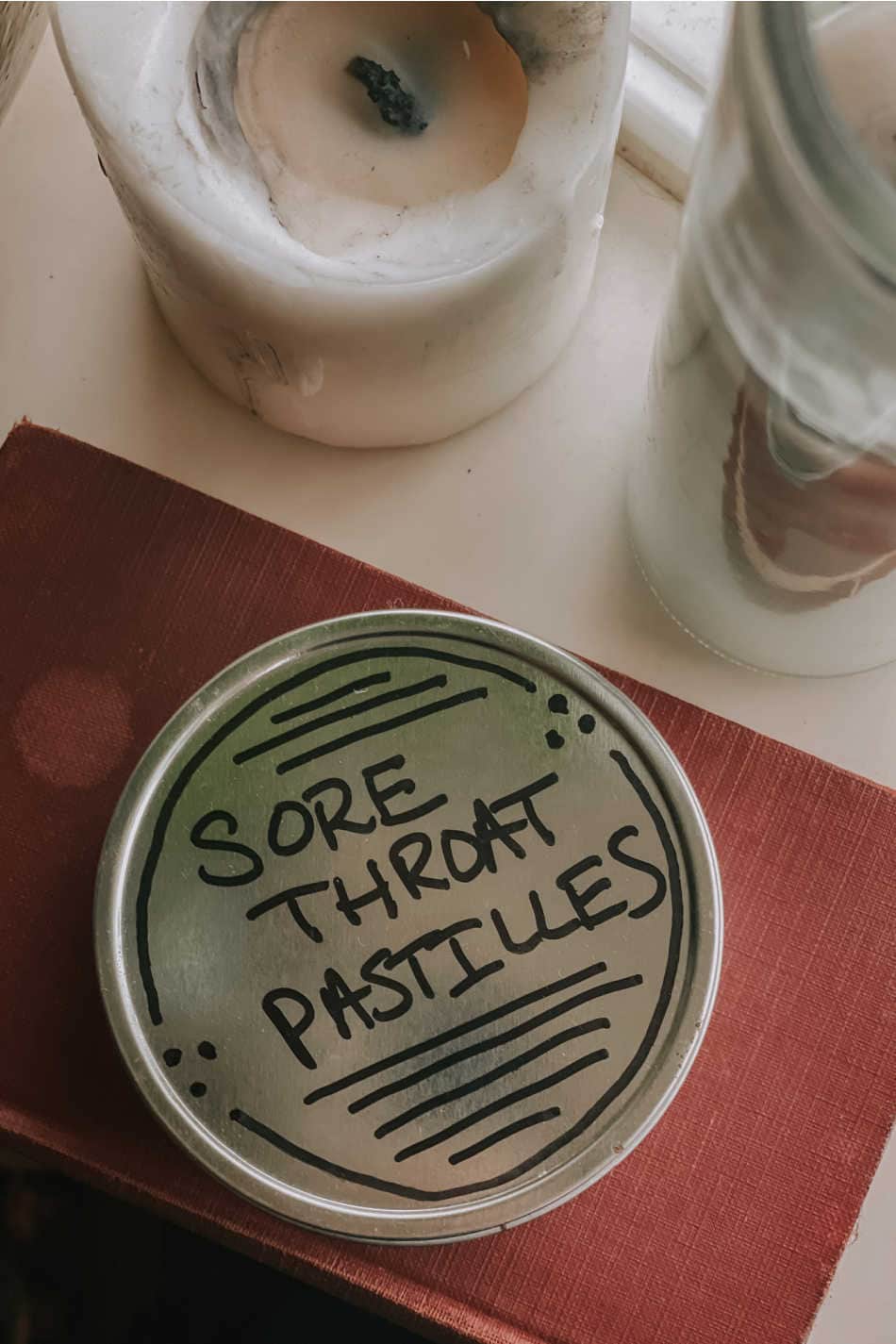
Herbal Explanations
This formula consists of a sustainably harvested slippery elm (Ulmus rubra, U. fulva) bark powder, marshmallow (Althaea officinalis) root powder, and cinnamon (Cinnamomum spp.) bark powder.
- Slippery elm bark is a cooling, moistening herb with demulcent properties, which basically means it soothes tissue inflammation and irritation. When mixed with water, yes even saliva, it releases a large amount of mucilage, a gooey like gel, that coats the tissues it comes into contact with and soothes them. Not only that, but slippery elm bark is considered a vulnerary herb, which means it works to restore tissue to its original healthy state–something that can be beneficial when tissue when a dry, scratchy, or sore throat is present.
- Marshmallow root is another cooling, moistening herb with demulcent properties, also working to soothe tissue inflammation and irritation. Marshmallow root also benefits the gut once it’s further along in the digestive tract by providing pre-biotic fiber that feeds the healthy bacteria in the gut.
- Cinnamon bark, like slippery elm bark and marshmallow root, has demulcent properties, but unlike the other herbs in this formula, it’s warming, so it helps to balance the energetic properties of the formula and enhance the flavor a bit. In addition, it also has antimicrobial properties, so if a sore throat is the result of a bacterial or viral infections, the cinnamon can add some extra immune support as well.
Alright friends, I hope you’ve enjoyed this updated video and further explanation on the herbs behind this recipe.
Be sure to make a batch of these and store them in your natural medicine cabinet for the autumn and winter season ahead!
Love and light,
Meagan